Before the first heat wave or during a sudden mid-summer warmup, it pays to know a safe, sensible troubleshooting routine for your home’s cooling system. This guide is designed for Illinois homeowners who want to resolve simple issues quickly and recognize when it is time to call a professional. You will learn a methodical approach that prioritizes safety, airflow, drainage, and refrigerant basics without diving into tasks that require specialized tools. For a quick refresher on system components and how they work together, you can begin with an overview of residential air conditioning as the foundation for the steps below.
Start with Safety
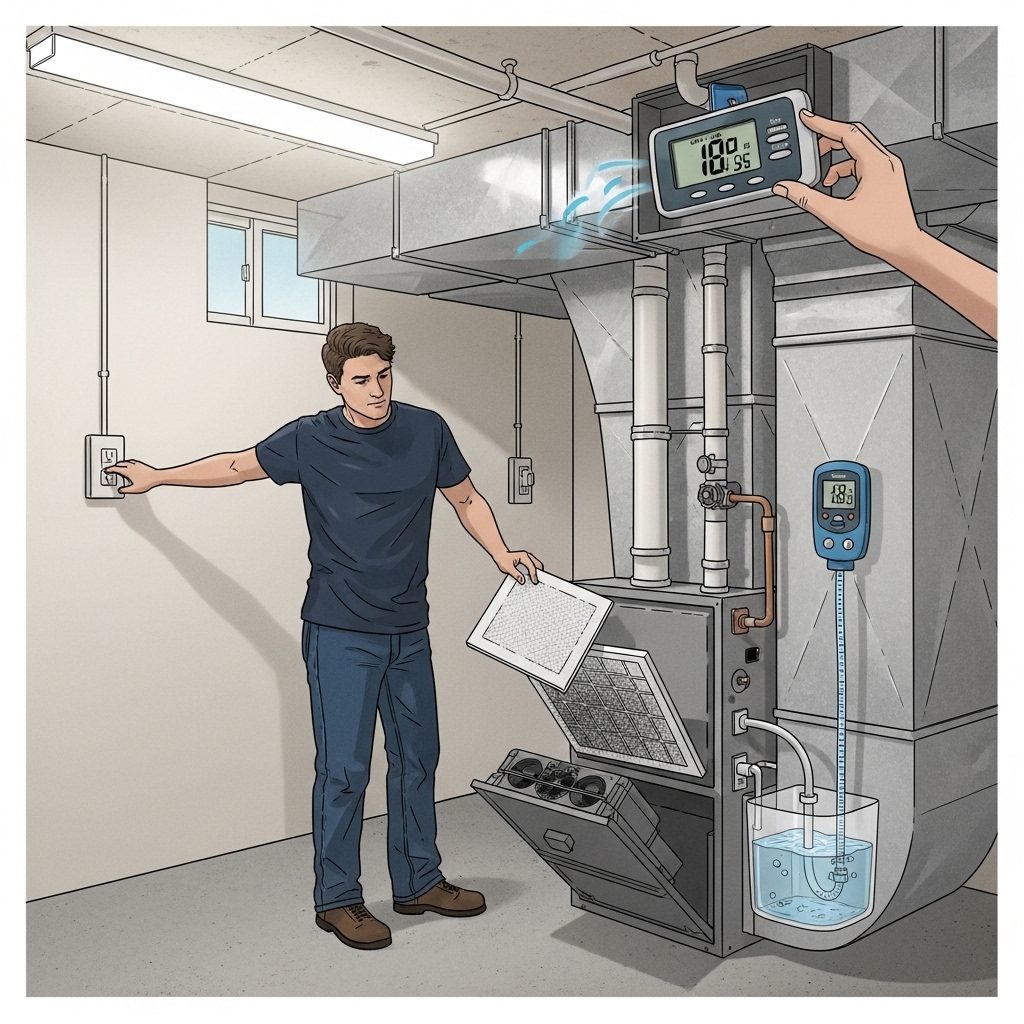
- Turn Off Power for Inspections: Before touching panels or wiring, switch off the system at the thermostat and use the outdoor disconnect if you will remove the condenser top for debris clearing. If you are not comfortable, stop and call a professional.
- Respect Electrical Limits: Do not reset a tripped breaker repeatedly; this can mask a serious fault and create a hazard.
- Avoid Coil Damage: Indoor coils and copper lines are delicate; avoid poking or scraping.
Step 1: Confirm Thermostat and Modes
- Mode and Setpoint: Ensure cooling mode is selected and the setpoint is below current indoor temperature.
- Fan Setting: Use auto for normal operation. On is acceptable for circulation but may warm supply air between cooling cycles and raise humidity.
- Calibration: Compare reading with a trusted thermometer near the thermostat, away from sunlight or supply air.
Step 2: Check Airflow
- Filter Condition: A clogged filter is the most common cause of poor cooling and coil freeze-ups. Replace if dirty.
- Registers and Returns: Open all supply registers and make sure return grilles are not blocked by furniture or rugs.
- Basement and Attic Ducts: Look for disconnected or crushed flexible ducts and leaking joints. Listen for whistling that indicates high static pressure.
Step 3: Inspect the Outdoor Unit
- Debris and Clearance: Clear leaves, cottonwood fluff, and grass clippings. Maintain two feet of clearance around the unit.
- Condenser Fan: With the unit running, confirm the fan spins and exhaust air is warm. A humming sound with no fan movement may indicate a failed capacitor.
- Coil Condition: If the fins are matted with debris, gently rinse from inside out with power off. Avoid deforming fins.
Step 4: Evaluate Drainage
- Water at the Air Handler: Inspect the primary drain, trap, and pan for blockages. A wet secondary pan or tripped float switch indicates a blockage that needs clearing.
- Trap Integrity: An incorrectly configured or dry trap can allow air to bypass the drain, causing poor drainage and odors.
Step 5: Observe System Performance
- Temperature Split: Measure the difference between return and supply air temperatures. A low split can indicate poor airflow or low charge; an excessively high split may suggest restricted airflow or a frozen coil.
- Cycle Behavior: Short cycling (frequent starts and stops) can result from oversizing, thermostat issues, or electrical problems.
- Humidity Feel: Sticky, clammy rooms signal inadequate moisture removal, often due to airflow imbalances or runtimes that are too short.
Common Scenarios and Fixes
- No Cooling at All: Check thermostat, breaker, and disconnect. Replace a dirty filter and clear debris from the condenser. If the breaker trips again or the unit hums without starting, call a professional.
- Warm Air from Vents: Confirm the outdoor unit is running. If only the indoor blower operates, a failed contactor, capacitor, or outdoor disconnect may be the issue.
- Ice on the Refrigerant Line or Coil: Turn off cooling and run the fan to melt ice. Replace the filter, open blocked vents, and schedule service if icing returns.
- Water Leaks: A clogged drain or failed trap is likely. Power down and call for service if float switches trip repeatedly.
- Uneven Cooling: Balance dampers, confirm returns, and look for duct leaks or restrictions in long runs to distant rooms.
Humidity and Comfort Tuning
Illinois summers can be deceptively challenging because humidity magnifies discomfort. You can improve results by enabling dehumidification features on compatible thermostats and by letting the system run longer, slower cycles. Verify that the coil and filter are clean and that the drain is flowing. If your home remains clammy, a professional evaluation of airflow and charge is warranted.
When to Stop DIY
- Electrical Odors or Scorch Marks: Shut off power and call a professional immediately.
- Repeated Breaker Trips: This suggests an underlying fault that should be tested with meters, not guesses.
- Suspected Refrigerant Issues: Charging or leak repair is not a DIY task. Incorrect handling can damage the system.
Smart Operation to Prevent Issues
- Filter Habits: Set reminders to check filters monthly during cooling season.
- Outdoor Care: Keep plants and fences away from the condenser and rinse the coil as needed.
- Thermostat Schedules: Use steady schedules and avoid wide swings that cause short cycling.
Mid-Guide Checkpoint
As you work through these steps, remember that most comfort problems result from airflow restrictions, dirty coils, or drainage issues. Simple maintenance and steady operating habits often resolve recurring complaints. If you are exploring system upgrades or advanced controls to improve reliability, it can help to review current options in residential air conditioning so you can make informed choices that match your home’s layout and needs.
FAQs
Q: How often should I rinse the outdoor coil?
A: Inspect monthly during high pollen or cottonwood season and rinse gently as needed. Always power down first.
Q: What temperature split should I see?
A: A typical range is around 15–20°F, but this varies with humidity, airflow, and system design. Persistently low splits after cleaning filters and coils warrant a professional check.
Q: Why does my system short cycle?
A: Common causes include oversized equipment, thermostat placement, misconfigured settings, or electrical components like capacitors and contactors nearing failure.
Q: Is it okay to close vents in unused rooms?
A: Generally no. Closing too many vents raises static pressure, reduces system airflow, and can cause icing or blower strain.
Q: How do I reduce humidity without lowering the thermostat too much?
A: Enable dehumidification controls, ensure proper airflow, and keep coils and drains clean. Longer, lower-speed cycles remove more moisture.
Get Back to Comfortable Living
A deliberate troubleshooting routine can restore comfort quickly and reveal when professional help is the smartest move. Keep filters clean, give your system breathing room outdoors, and watch for early warning signs like icing or unusual sounds. When you are ready for expert support or want to optimize performance before the next heat wave, schedule a service visit and align your system settings so your air conditioning delivers steady, reliable comfort across every room in your Illinois home.