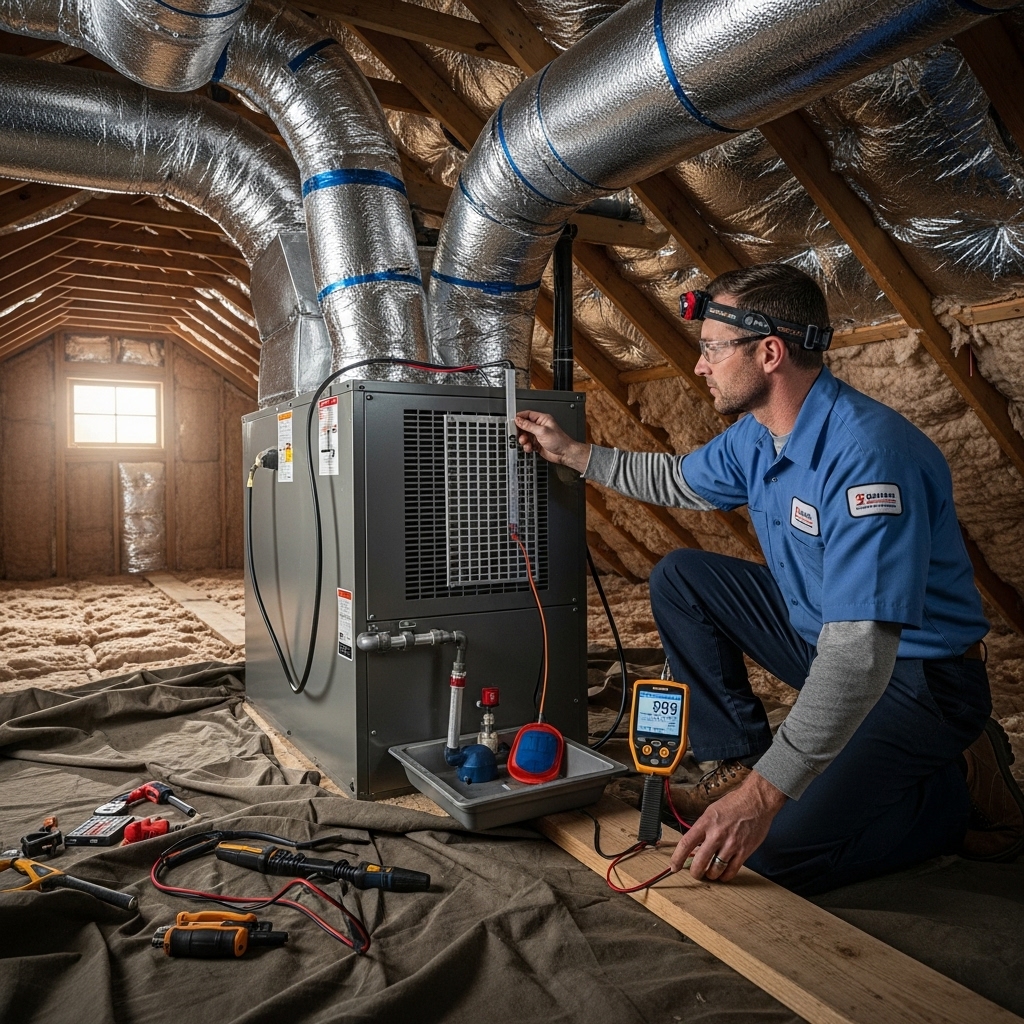
Advanced inspections go beyond quick tune-ups. They create a documented, repeatable process that validates performance, safety, and code alignment for Illinois homes. When performed by trained professionals, these inspections measure airflow, pressure, electrical health, refrigerant performance, drainage integrity, and controls logic against design targets. The result is a clear picture of how your system behaves under real-world conditions, and a plan to correct deficiencies. If you want a broader understanding of components and best practices before scheduling an assessment, review the fundamentals of residential air conditioning so the measurements below make intuitive sense.
Why Advanced Inspections Matter in Illinois
Illinois summers are humid, and winters are cold. This swing requires cooling systems to manage both sensible heat (temperature) and latent load (moisture) while sharing ducts with heating equipment. Advanced inspections confirm that the ducts, blower, coil, and controls deliver the right airflow at the right pressure, that the refrigerant circuit is charged and metered properly, and that drainage systems prevent water damage. They also identify installation defects—like starved return air or improper line-set design—that undermine comfort and equipment life.
Documentation and Pre-Work
- Scope and Objectives: Define what will be measured: static pressure, airflow, temperature split, superheat, subcooling, electrical readings, and condensate performance.
- Equipment Data: Record model and serial numbers, blower tables, coil tonnage, and metering device type (TXV or fixed orifice).
- Design Targets: Note Manual J load results, Manual D duct design targets, and blower CFM per ton goals.
- Ambient Conditions: Capture indoor/outdoor temperatures and humidity to interpret readings properly.
Airflow and Static Pressure Testing
- Total External Static Pressure (TESP): Measure before and after the air handler. Compare to the manufacturer’s maximum rated static. Elevated TESP indicates duct restrictions or restrictive filters.
- Filter and Coil Pressure Drop: Individual measurements isolate the source of restriction. A dirty filter or coil will show exaggerated pressure drop.
- Blower Speed and CFM: Using blower tables or a flow grid, confirm delivered airflow meets the design target (often around 350–400 CFM per ton, adjusted for dehumidification goals).
- Room-by-Room Balancing: Spot-check key rooms with an anemometer to confirm adequate supply volumes and pressure balance.
Duct Integrity and Leakage
- Visual Sealing Inspection: Look for failed tape, gaps at takeoffs, and crushed flex runs.
- Return Air Strategy: Confirm sufficient return grille area and pathways to avoid starved airflow, especially on second floors.
- Leakage Testing: Where applicable, perform duct leakage tests or use pressure diagnostics to quantify loss that undermines efficiency and comfort.
Refrigerant Circuit Verification
- Superheat and Subcooling: Match readings to manufacturer charts for measured conditions to verify charge and metering device performance.
- Saturation Temperatures and Pressures: Evaluate against expected values for the refrigerant type, confirming compressor and TXV function.
- Line-Set Practices: Inspect insulation on the suction line, support spacing, and brazed joints. Look for oil stains that may indicate leaks.
Electrical Health and Reliability
- Voltage and Amperage: Measure at the condenser and air handler, comparing to nameplate data.
- Capacitors and Contactors: Test microfarads under load and inspect contacts for pitting or heat damage.
- Connections and Lugs: Verify tightness and look for discoloration or insulation damage indicative of overheating.
Condensate Management
- Trap Design and Function: A proper trap prevents air from bypassing the drain. Verify slope and cleanout accessibility.
- Float Switches and Safeties: Test shutdown response and confirm secondary protection where the unit sits above finished spaces.
- Drain Routing: Ensure discharge goes to an appropriate location and does not reintroduce moisture near the foundation.
Controls and Dehumidification Logic
- Thermostat Configuration: Confirm system type, staging, fan profiles, and dehumidify-on-demand settings.
- Fan Delays: Verify on/off delays that support coil drying and efficient operation.
- Zoning Systems: If present, check damper operation, static bypass strategies, and setpoints to avoid short cycling.
Performance Validation
- Temperature Split: Confirm return-to-supply temperature difference aligns with expectations for the measured airflow and humidity.
- Noise and Vibration: Observe start-up, steady-state, and shutdown behavior to identify mounting or line-set issues.
- Outdoor Conditions: Account for direct sun, recirculation from structures, and prevailing winds that may affect condenser efficiency.
Reporting that Drives Action
A strong inspection ends with a prioritized report. Immediate items include safety and water-risk issues (float switch failures, compromised wiring), followed by performance corrections (dirty coil, high TESP), and finally improvements (additional returns, duct sealing, control upgrades). The report should include measurements, photos where helpful, and clear recommendations with expected outcomes like improved humidity control, quieter operation, or more even room temperatures across floors.
Homeowner Preparation and Participation
- Access: Clear access to the air handler, return plenums, and the outdoor unit.
- Filter Status: Install a clean filter before testing to represent normal operation.
- Comfort Notes: Provide room-by-room observations—hot spots, humidity concerns, noise, or odors.
- Past Work: Share records of previous maintenance, duct changes, or renovations that might affect airflow.
Interpreting Findings in an Illinois Context
High humidity and mixed construction styles—from brick bungalows to new builds—mean the same problem can have different causes. A warm second floor may trace to return air shortages, insufficient insulation, or a weak blower profile. Meanwhile, a clammy first floor might stem from minimal runtime at high blower speed. The inspection’s value lies in distinguishing these root causes and matching the correction to the observed data.
Mid-Inspection Perspective
As you review your results, focus on the relationships: airflow enables heat and moisture removal; refrigerant charge determines how effectively the coil absorbs heat; drainage ensures the moisture has somewhere to go; and controls orchestrate all of it. If one pillar falters, comfort suffers. To better appreciate the system-wide interplay, many homeowners take a moment to revisit modern air conditioning concepts so inspection numbers translate into actionable decisions.
After the Inspection: From Data to Upgrades
- Immediate Corrections: Clean coils, clear drains, replace weak capacitors, and seal glaring duct leaks.
- Performance Adjustments: Tune blower speed for target static and dehumidification goals; rebalance dampers.
- Targeted Upgrades: Add return capacity, insulate and seal ducts in unconditioned spaces, or improve thermostat capabilities.
- Long-Term Planning: If equipment is aging, use inspection data to size and specify replacements accurately, avoiding oversizing and ensuring better humidity control.
FAQs
Q: How long does an advanced inspection take?
A: Expect one to three hours depending on access, system complexity, and whether duct leakage testing or detailed balancing is included.
Q: Do I need this if I already have annual maintenance?
A: Advanced inspections complement routine maintenance by providing measurements and targets. They reveal duct and design issues that basic clean-and-check visits can miss.
Q: Will adjustments improve humidity control?
A: Often yes. Correct airflow, clean coils, and proper charge enable longer, more effective moisture removal, especially with compatible controls.
Q: Can inspection results help with future replacements?
A: Absolutely. Load and airflow data guide equipment sizing, staging choices, and duct improvements that pay dividends for years.
Q: What should I have on hand for the visit?
A: Clear access, a clean filter installed, thermostat credentials if needed, and notes on comfort issues help the process go faster and yield better results.
Move Forward with Clarity
Advanced inspections turn guesswork into a plan. With documented airflow, pressure, electrical, and refrigerant readings, you can correct issues that have nagged for years and set the stage for quieter, drier, and more consistent comfort. When you are ready to translate data into action, schedule an expert visit and align your system settings so your air conditioning delivers dependable performance through every Illinois season.