When your cooling system falters during a humid Illinois afternoon, a clear repair process can turn frustration into confidence. Understanding how technicians diagnose problems, communicate findings, and verify results helps you make timely, informed decisions. This guide explains each stage—from initial symptoms and safety checks to parts replacement, performance testing, and prevention—so you know what to expect and how to advocate for your comfort. If you are starting from scratch and want a quick refresher on how home cooling works, explore the basics of air conditioning and the components that must work together to keep temperatures and humidity stable.
Recognizing Symptoms Early
Problems often begin subtly: longer runtimes, warm air at supply registers, musty odors, or unusual noises at start-up. Write down what you notice, when it occurs, and any recent changes—filter replacements, thermostat adjustments, or renovations that may have produced dust. Early, detailed observations can shave time off diagnostics and prevent cascading failures.
Safety and Initial Checks
- Power and Settings: Verify the thermostat is in cooling mode, temperature is set below current indoor conditions, and the fan is in auto unless instructed otherwise by your technician.
- Breaker and Disconnect: Inspect the outdoor unit’s disconnect and the panel breaker. If a breaker is tripped, do not repeatedly reset it—this may indicate a short or failing component.
- Airflow Basics: Ensure filters are clean and supply/return paths are clear. Starved airflow can cause coil freeze-ups and poor cooling.
Professional Diagnostic Workflow
- Interview and Observation: The technician reviews your notes, inspects the thermostat, and listens for noises at start-up and shutdown.
- Visual Inspection: They check the outdoor condenser, fan, coil cleanliness, wiring, contactor condition, and signs of oil or UV dye indicating refrigerant leaks.
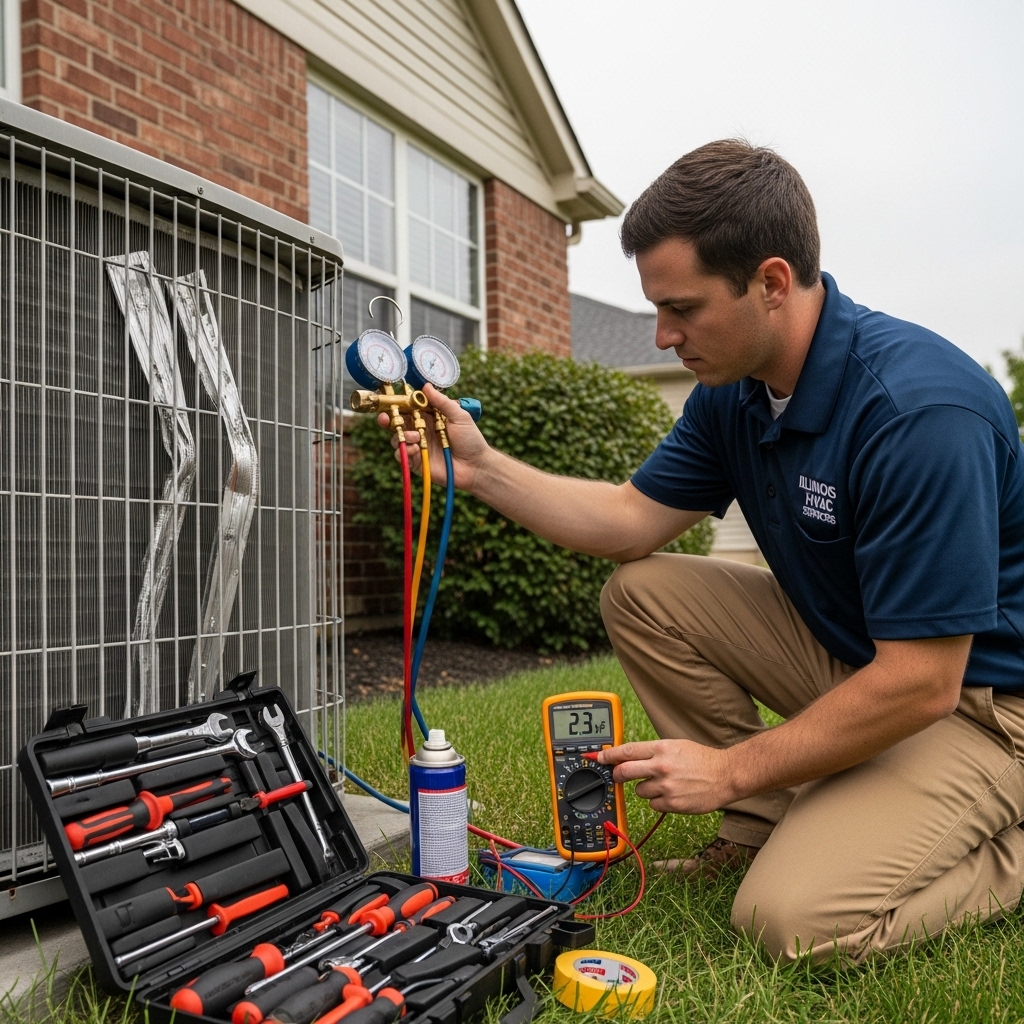
- Electrical Testing: Voltage, amperage, and capacitor values are measured against specifications. Loose lugs, pitted contacts, or weak capacitors are common mid-summer culprits.
- Airflow and Static Pressure: Measuring total external static pressure, filter pressure drop, and blower performance reveals restrictions.
- Refrigerant Circuit: Gauges and temperature probes allow calculation of superheat and subcooling, guiding diagnosis of charge issues, restrictions, or compressor performance.
- Condensate and Safety Switches: The drain, trap, and float switches are checked to prevent or explain water-related shutdowns.
Common Failures in Illinois Homes
- Dirty Coils and Filters: High pollen and construction dust can clog filters and coils, reducing capacity and raising energy use.
- Capacitor and Contactor Wear: Heat and cycling stress these parts. Failure often presents as a humming condenser that will not start or short cycling.
- Refrigerant Leaks: Corrosion, vibration, or poor brazing at installation can lead to gradual loss of charge, reducing cooling and risking compressor damage.
- Drain Blockages: Humid weather accelerates algae growth in the condensate system, triggering float switches and shutdowns.
- Blower Motor Issues: ECM or PSC motor failures manifest as weak airflow, squealing, or no operation.
Repair Versus Replace Decisions
Technicians consider age, condition, warranty status, and the cost/benefit of repair versus replacement. If your system is newer and the failure is localized (e.g., capacitor or contactor), a repair is straightforward. Persistent refrigerant leaks, compressor issues, or chronic duct and static pressure problems may prompt a larger conversation about long-term reliability and comfort. The goal is to align the solution with your budget, comfort needs, and plans for the home.
Step-by-Step: What Happens During a Typical Repair
- Problem Confirmation: The technician reproduces the symptom and confirms that safety devices and controls respond as designed.
- Isolation: They narrow the failure to a component or subsystem—electrical, airflow, refrigerant, or drainage.
- Quotation and Consent: You receive an explanation of findings, options, and timeline. Ask for clarity on parts, labor scope, and any follow-up checks.
- Parts Replacement: The technician replaces the failed component, observing manufacturer torque specs and safe handling procedures.
- System Start-Up: After repair, the system is powered on and monitored through a full cycle to ensure stable operation.
- Performance Verification: Key readings—superheat, subcooling, temperature split, and static pressure—are recorded to verify the fix.
- Documentation and Recommendations: You receive a summary of work performed and any advisories to prevent recurrence.
Special Considerations for Refrigerant Issues
Refrigerant problems require precision. A proper repair includes leak detection, evacuation with a high-quality vacuum pump to a deep vacuum, and a charge verified by manufacturer procedures. Weighing in charge and validating with superheat/subcooling ensures both capacity and reliability. Dye or electronic leak detection can help locate slow leaks. If a coil is leaking, replacement and proper line-set practices (including nitrogen purge while brazing) are critical to prevent future contaminants from damaging the compressor.
Drainage and Humidity-Related Repairs
In Illinois, condensate failures spike in mid-summer. A clean trap, appropriate fall, and functioning float switches are non-negotiable. If your system shuts down intermittently and you find water in the secondary pan, call for service promptly. Persistent moisture can damage ceilings or floors and encourage microbial growth. A repair may include clearing the line, correcting trap geometry, adding a cleanout, and confirming that negative pressure is not pulling air across the trap.
Communication Best Practices
- Provide a History: Note the date of the last maintenance, any recent filter changes, thermostat adjustments, or renovations.
- Be Specific: Describe sounds, smells, and performance changes with times and durations.
- Ask for Readings: Request the key diagnostic measurements after the repair—these are your proof of performance.
Preventing Repeat Failures
- Schedule Seasonal Checkups: Pre-season tune-ups catch weak capacitors, dirty coils, and marginal airflow before heat waves.
- Maintain Clean Filters and Coils: Reduced static pressure eases motor load and improves cooling.
- Monitor Humidity: If your home feels clammy, discuss dehumidification control and blower speed strategies.
Mid-Guide Refresh
If you want a simple mental model while you navigate a service call, remember that cool, dry, quiet comfort depends on three pillars: airflow, refrigerant management, and drainage. Keeping those pillars steady often means routine maintenance paired with timely, well-documented repairs. For broader context on system types and features that influence repair decisions, explore modern approaches to residential air conditioning so you can ask sharper questions and choose long-term solutions.
What Technicians Document
- Equipment Model/Serial Numbers: For warranty validation and parts matching.
- Electrical Measurements: Line voltage, compressor and fan amps, and capacitor microfarads.
- Refrigerant Data: Pressures, temperatures, superheat, and subcooling compared to performance charts.
- Airflow and Static: Total external static pressure, filter drop, and approximate CFM.
- Drainage: Trap condition, float switch testing, and evidence of prior overflow.
FAQs
Q: How long should a typical repair visit take?
A: Simple electrical repairs can take under an hour. Refrigerant leaks or airflow issues may require several hours, especially if coil access or brazing is involved.
Q: Why do problems recur after a quick fix?
A: If underlying issues—like high static pressure, dirty coils, or a slow refrigerant leak—are not addressed, symptoms may return. Comprehensive diagnostics prevent repeat failures.
Q: Is it safe to run the system if it is underperforming?
A: If the system is icing, tripping breakers, or shutting off on safety switches, turn it off and call for service to avoid additional damage.
Q: Can smart thermostats cause problems?
A: Misconfigured settings or incompatibility with staging can cause short cycling or humidity problems. Verify settings and compatibility during service.
Q: Should I replace both the coil and condenser together?
A: Matched components ensure proper capacity, efficiency, and warranty coverage. In many cases, replacing both together is recommended for performance and reliability.
Regain Comfort with Confidence
No one enjoys a surprise breakdown, but a clear process—from symptom to solution—minimizes stress and maximizes reliability. Keep a maintenance routine, call for help early, and ask for documented readings after each repair. When comfort matters most, schedule professional service and explore options that align with your home’s needs so your air conditioning performs smoothly through Illinois heat and humidity.