Introduction
Understanding inspection requirements helps Illinois homeowners maintain safe, reliable cooling and avoid surprises during home sales, renovations, or seasonal tune-ups. While day-to-day maintenance is largely a homeowner responsibility, inspections—formal or informal—ensure that critical safety and performance checks are not overlooked. This guide explains the landscape around maintenance inspections, highlights what a thorough evaluation typically includes, and clarifies how local climate and building practices affect what inspectors and technicians look for.
We will outline common elements of an inspection for existing systems, touch on code-related considerations that may apply during equipment replacement or major work, and suggest a rhythm for documenting your own checks. If you prefer a professional to conduct periodic, documented evaluations, you can explore reputable air conditioning maintenance services that align with Illinois homes and regional weather.
What “Inspection” Usually Means for Existing Systems
For systems already installed and operating, a maintenance inspection is a structured review of safety, cleanliness, airflow, electrical integrity, drainage, and overall performance. It is not the same as a new-installation code inspection, but it follows disciplined steps and documentation. The result is often a written report noting conditions observed, tests performed, and recommended actions.
In Illinois, humid summers put extra emphasis on condensate drainage, evaporator coil cleanliness, and filter condition. Inspectors and technicians will also consider how storms and landscaping affect the outdoor condenser’s airflow and stability. A thorough review is tailored to climate realities—pollen, cottonwood, and dust in early summer; strong winds and thunderstorms mid-season; and fluctuating temperatures that can drive icing if airflow is compromised.
Core Components of a Maintenance Inspection
Safety and power controls are typically verified first. Inspectors ensure disconnects are accessible, breakers are correctly sized, and wiring and conduit are intact and secure. Any signs of overheating, corrosion, or water intrusion near electrical components are flagged for immediate attention.
Airflow is assessed by checking filter fit and condition, visual inspection of the blower wheel, and confirmation that supply and return pathways are unobstructed. Doors that close tightly on rooms without return grilles can create pressure imbalances; inspectors often note these comfort risks, especially in multi-story homes.
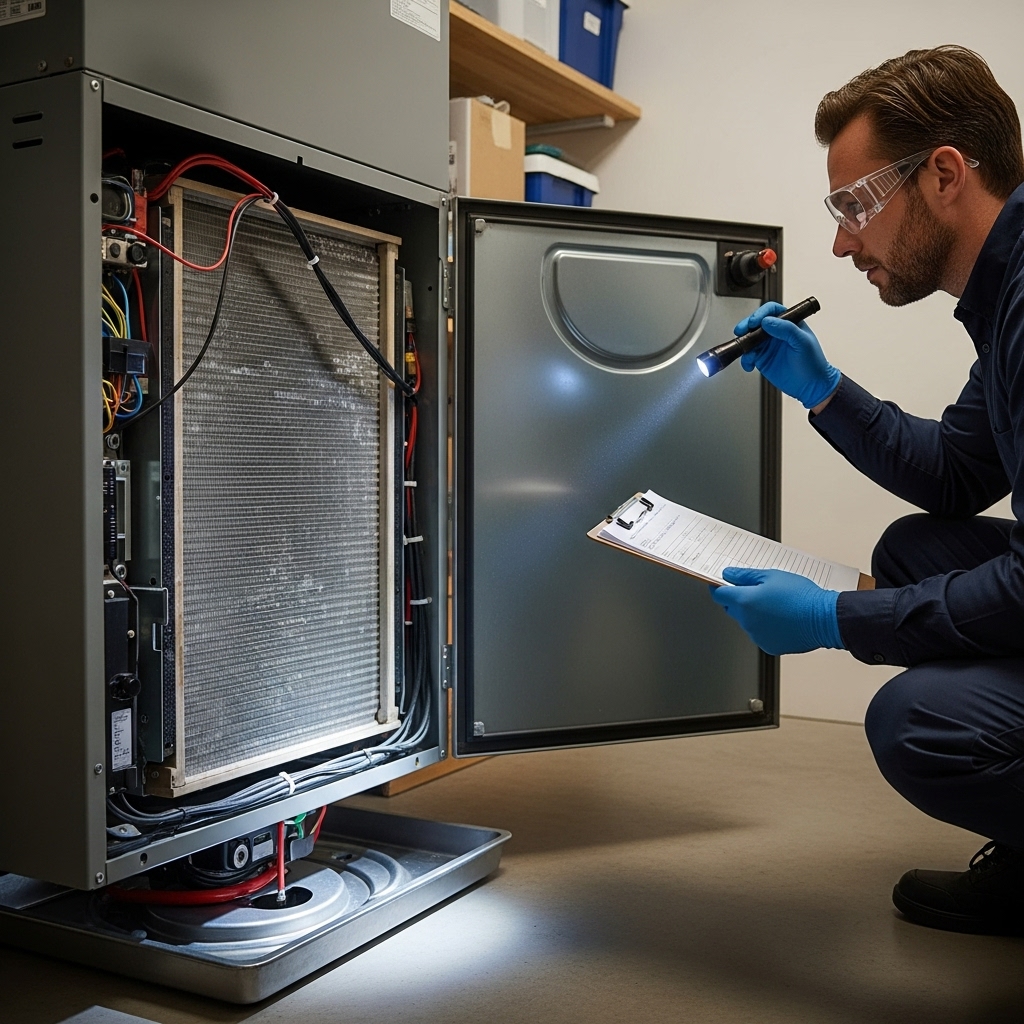
Coil condition is reviewed indoors and outdoors. The outdoor condenser coil should be free of debris and bent fins, while the evaporator coil should be free of heavy dust or biofilm. In many cases, evaporator coils are inspected indirectly through panels or with mirrors and flashlights; visible buildup can warrant cleaning to restore capacity and prevent icing.
Condensate management is a priority in Illinois. The inspection confirms that the primary drain flows, the trap is clear, and any safety switches function correctly. If the air handler sits above finished spaces, a secondary pan and drain or other protection is verified. Water alarms or float switches are commonly recommended when risk is elevated.
Refrigerant lines and insulation are checked for physical condition, rubbing points, and missing insulation on the larger suction line. While maintenance inspections do not open the refrigerant circuit, visual cues such as frosting, oil stains, or unusual compressor noise may prompt a recommendation for deeper diagnostics.
Performance confirmation completes the inspection. A temperature split between return and supply is measured after a stable run. Inspectors will also listen for short cycling, measure airflow with appropriate tools if contracted to do so, and verify that thermostat settings and sensor placement do not cause false readings.
Documentation and Homeowner Records
Quality inspections include documentation. Expect notes on filter size and condition, coil status, drain operation, and any corrective actions taken. Photos of concerns—such as a clogged drain trap or damaged insulation—are helpful for planning and future comparison. Homeowners should keep inspection reports with filter change dates and any service invoices to build a clear maintenance history.
A simple log of your own observations strengthens future inspections. Record unusual noises, rooms that run warm, or signs of moisture near the air handler. Timing matters; for example, noting that a gurgling drain occurs after back-to-back thunderstorms can help a technician identify the cause quickly.
How Illinois Climate Shapes Inspection Priorities
Inspectors in Illinois emphasize drainage, coil cleanliness, and outdoor coil airflow because humidity and debris build-up are common. After a cottonwood bloom, the coil may look clear from a distance but be packed with fluff on the outer fins. Regular rinsing between early June and mid-July becomes part of the expected maintenance rhythm, and inspections often confirm whether those rinses have kept fins open.
Thunderstorms and high winds can introduce water and debris into places not designed to handle them. Inspectors look for firmly mounted panels, tight conduit connections, and intact grommets that keep water away from electrical areas. They also assess whether the outdoor unit remains level after freeze-thaw cycles and ground movement, which can shift pads subtly over time.
Humidity pushes inspectors to verify condensate security. Float switches, trap design, and line routing matter when long cycles remove significant moisture. Even a small sag in a line can become a water trap for algae growth; documenting and correcting these layout issues is a practical outcome of a good inspection.
Inspection Frequency and Timing
For many homes, a once-per-year maintenance inspection before peak cooling season is a practical baseline. In areas with heavy debris or in homes with pets, a mid-summer review or quick homeowner check is wise to ensure the outdoor coil remains clear and the drain is flowing well. The old rule of thumb—inspect before the first heat wave and reassess after storms—is a useful guide in Illinois.
Real estate transactions, renovations, or repeated comfort complaints are good reasons to schedule an extra inspection. When selling a home, a recent maintenance report supports buyer confidence and may reduce questions during the general home inspection. After duct changes or remodeling, a targeted inspection can verify that airflow remains balanced and that returns are adequate for new room configurations.
What Inspections Do Not Do
Maintenance inspections are not design certifications or code approvals for new installations. They also are not comprehensive energy audits, though they may identify obvious improvement opportunities. While inspectors can recommend repairs and cleaning, they typically do not add refrigerant, modify ductwork extensively, or perform invasive procedures during a routine visit without prior authorization.
Similarly, inspections should not replace homeowner vigilance. Filters still need regular attention, the outdoor coil still needs rinsing, and drains still need to be kept clear, especially during the humidity of July and August. Think of inspections as a structured snapshot that complements ongoing care.
Preparing for an Inspection
Make the equipment accessible by clearing storage around the air handler and keeping a path to the outdoor unit. Replace the filter if it is past due so airflow measurements and coil observations reflect clean air. Have your maintenance log available, including dates of the last coil rinse, drain cleaning, and any observed issues like noises or hot rooms.
Note thermostat behavior and settings. Document any times when the system seemed to short cycle or when humidity felt high despite long runs. Identify which rooms are most affected. These details help an inspector focus on the most relevant tests and observations.
When an Inspection Leads to Service
Inspection findings often generate prioritized recommendations. Immediate items might include clearing a clogged drain or securing a loose electrical connection. Secondary items might involve scheduling a blower wheel cleaning or re-insulating a refrigerant line segment. A longer-term recommendation could be airflow balancing if certain rooms are consistently uncomfortable.
Homeowners should weigh urgency, comfort impact, and the season. Fix drainage and safety issues right away, then plan performance optimizations. The report serves as a roadmap that guides maintenance decisions through the rest of the summer.
Frequently Asked Questions
Q: How is a maintenance inspection different from a new-installation inspection?
A: A maintenance inspection reviews an existing system’s safety and performance, while a new-installation inspection verifies that new equipment meets code and installation standards.
Q: How often should I schedule a maintenance inspection in Illinois?
A: At least once per year before peak cooling is common. Homes with heavy debris exposure or recurring issues benefit from an additional mid-summer check.
Q: What should I have ready for the inspector?
A: Clear access to the equipment, your maintenance log, and notes about any comfort concerns, noises, or humidity issues. A fresh filter helps produce accurate observations.
Q: Will the inspector add refrigerant if the system seems low?
A: Not during a basic maintenance inspection without prior authorization. Low charge requires leak checks and proper procedures that go beyond routine review.
Q: Why does drainage get so much attention?
A: Illinois humidity means lots of condensate. Clogged drains cause shutdowns, water damage, and poor air quality. Verifying safe, steady drainage is a high priority.
Q: Can an inspection solve hot rooms?
A: Inspections identify causes—blocked returns, duct leaks, high static pressure—but fixes may require adjustments, sealing, or balancing work scheduled after the inspection.
Q: What records should I keep?
A: Inspection reports, filter change dates, coil rinse notes, drain cleaning dates, and any service invoices. These build a history that improves future diagnostics.
Plan Confident Inspections for Every Season
Inspections create clarity. They validate safety, document performance, and prioritize actions so your cooling is reliable when summer turns muggy. When you understand what inspectors look for—airflow, drainage, coil condition, electrical integrity—you can prepare effectively and keep maintenance on track with fewer surprises.
If you want a reliable partner to perform documented evaluations and keep your system tuned for Illinois weather, schedule professional air conditioning maintenance and enjoy cooler rooms, steadier humidity control, and peace of mind all season long.