
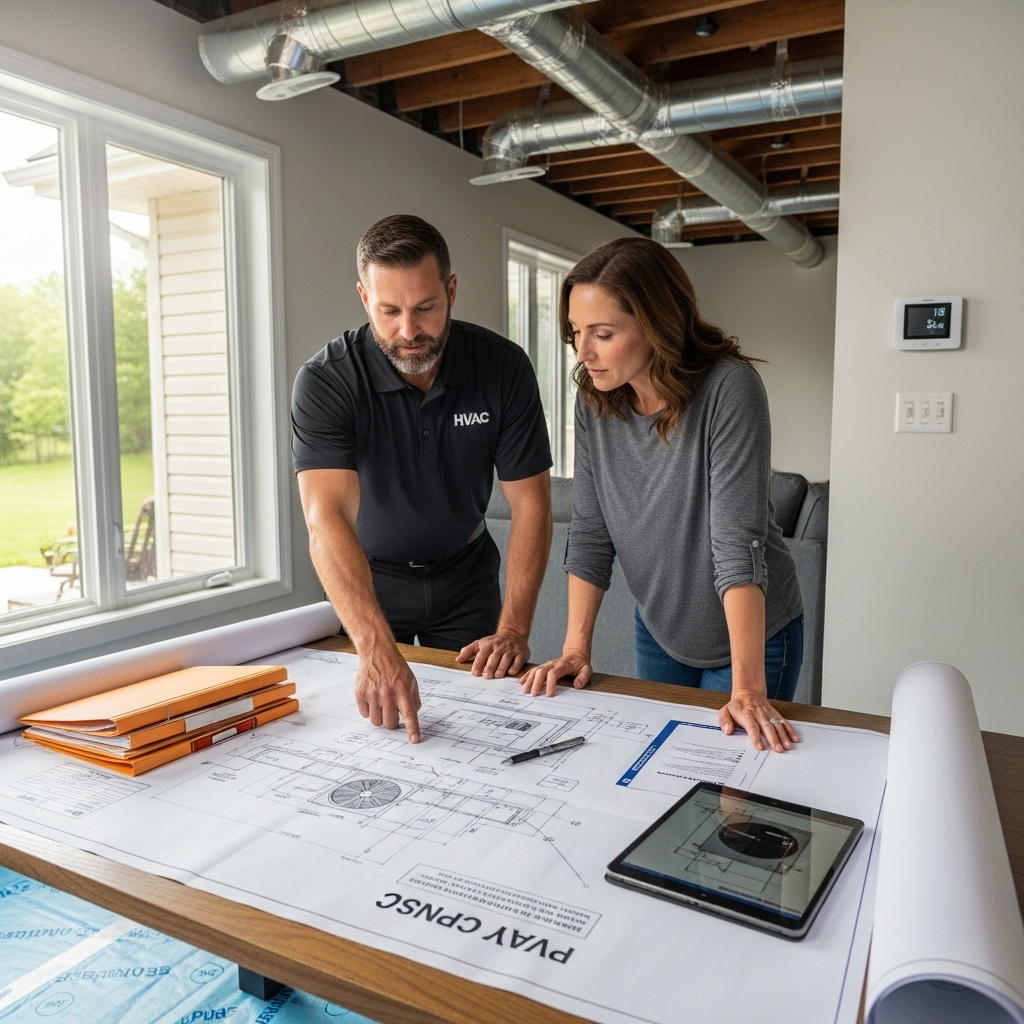
Introduction: A Smart Plan for a Cool Illinois Home
Planning a successful air conditioning project in Illinois starts long before a technician arrives at your door. The state’s hot, humid summers and dramatic seasonal swings mean the system you choose, the way your home is prepared, and the steps you take to verify quality will determine how comfortable and efficient your space feels for years. If you are just beginning to research options, it helps to understand the full journey of air conditioning installation from the first assessment through commissioning and maintenance. The clearer your plan, the smoother your experience and the better your results.
Illinois homeowners often face a mix of old and new: charming bungalows, mid-century ranches, and newer builds with complex layouts. Each type brings different questions about ductwork, electrical capacity, and airflow. A written plan keeps you focused on the essentials—load calculations, equipment selection, placement, and the must-have inspections and paperwork—so you can avoid delays and enjoy a cooler home as soon as the weather warms.
Define Your Goals and Priorities
Start by clarifying what “success” looks like for your household. Do you want uniform temperatures in every room, quieter operation, or improved indoor air quality? Are you aiming to lower energy consumption, reduce humidity, or add zoning? Writing down your top three to five outcomes will guide all later decisions, from model selection to duct design.
Consider comfort challenges by room: a sunny second-floor bedroom, a home office that runs warm with equipment, or a finished basement that feels clammy. Map them out so a contractor can suggest solutions such as zoning, supply register adjustments, dampers, or dehumidification strategies.
Understand Permits and Code Basics
Most Illinois municipalities require a mechanical permit for a new or replacement central air conditioner. Local authorities reference national standards such as the International Mechanical Code and the National Electrical Code, alongside the Illinois Energy Conservation Code. You may need to provide equipment specifications, site plans, and sometimes a load calculation summary. Ask your local building department what they require before work begins to prevent schedule disruptions.
Permits exist to protect your safety and ensure the system can operate efficiently. Expect inspections focused on electrical connections, condensate management, refrigerant line routing, and equipment anchoring or clearances. Keeping documentation in a labeled folder—permit applications, approvals, equipment spec sheets, and inspection reports—pays off later for warranty needs or future home sales. In the context of compliance and documentation, it helps to treat air conditioning installation like a project with checkpoints rather than a single-day event.
Right-Size the System with Load Calculations
Accurate sizing is the foundation of comfort. Oversized systems cycle on and off too frequently, using excess energy and leaving humidity behind; undersized systems struggle on the hottest days. A Manual J (or equivalent) load calculation accounts for your home’s insulation levels, window areas, orientation, infiltration, and occupancy patterns. It is far superior to rules of thumb or matching the old unit’s tonnage without analysis.
- Request a written load calculation and keep it with your project file.
- Discuss whether your home’s envelope improvements—air sealing, insulation, window upgrades—could lower the required capacity.
- Ask how the design addresses humidity control, which is a major comfort factor during Illinois summers.
Choose Equipment That Matches Your Needs
Once you know the required capacity, evaluate equipment types: single-stage, two-stage, or variable-speed condensers, and matching air handlers or furnaces with appropriate blower technology. Variable-speed systems excel at maintaining steady temperatures and controlling humidity, while two-stage equipment offers a solid middle ground between cost and performance. Consider filtration and IAQ accessories such as media filters or UV lights if allergies or dust are concerns.
Review sound ratings, warranty coverage terms, and maintenance requirements. Ensure compatibility with your thermostat—especially if you plan to use advanced scheduling and monitoring features. The goal is an integrated system designed to work as a whole, rather than a collection of mismatched components.
Evaluate Ductwork and Air Distribution
Even the best outdoor unit cannot perform if ducts leak or are poorly sized. Ask for a duct inspection that checks for adequate return air, proper supply register placement, and sealing at seams and joints. Balancing dampers can help fine-tune airflow between levels. In older Illinois homes, you may find limited return pathways; a contractor can recommend adding returns or transfer grilles to improve comfort.
- Seal ducts with mastic or UL-listed foil tape—not cloth duct tape—to reduce leakage.
- Insulate ducts that pass through unconditioned spaces to prevent energy loss and condensation.
- Confirm that supply registers are not blocked by furniture or rugs, and that returns have clear paths.
Plan Condensate and Refrigerant Line Routing
Proper condensate drainage prevents water damage and microbial growth. Discuss drain slope, secondary pans where needed, and where the line terminates. For refrigerant lines, ask about line-set sizing, protection against mechanical damage, and neat routing to preserve your home’s appearance. Lines should be properly insulated to minimize energy loss and condensation.
Electrical Requirements and Placement
Your outdoor unit needs a dedicated circuit, correctly sized disconnect, and proper grounding. The indoor unit’s blower also draws power that must be accounted for in your panel capacity. Location matters: choose an outdoor site with adequate airflow clearance, away from dryer vents or areas that collect leaves and snow. Indoors, ensure there is enough space to service the air handler or furnace, change filters, and perform coil cleaning.
Timeline and Home Preparation
Build a simple schedule with milestones: permit submission, equipment ordering, duct modifications, installation day, and inspections. Clear pathways to the work areas, and protect flooring. If pets are in the home, plan for containment so technicians can work efficiently. Gather thermostats, Wi-Fi information for smart controls, and previous service records to help the crew understand any historical issues.
Installation Day and Commissioning
Quality installation goes beyond setting equipment in place. Expect refrigerant charging to be verified, airflow measured, and the thermostat configured. Ask for a walkthrough of the system, including filter changes, humidifier settings (if present), and how to interpret any status indicators. A brief tutorial on thermostat programming helps you capture savings and comfort from day one.
Post-Installation Maintenance
Protect your investment with routine maintenance. Change or clean filters on a regular schedule and keep outdoor coils free of debris. Listen for unusual noises and check that drains are clear at the start of cooling season. Document maintenance visits and keep receipts together with your installation records.
Common Pitfalls to Avoid
- Selecting equipment by brand familiarity alone rather than by capacity, features, and fit for your home.
- Overlooking duct issues that undermine performance even when the outdoor unit is high quality.
- Skipping permits or inspections, which can complicate resale and warranty support.
- Ignoring humidity control, leading to sticky indoor conditions even at the right temperature.
Frequently Asked Questions
Q: How early should I start planning before summer? A: Begin in late winter or early spring to allow time for load calculations, permits, and scheduling. Early planning also gives you more equipment options.
Q: Do I need a load calculation for a like-for-like replacement? A: Yes. Homes change over time—insulation, windows, and air sealing can alter the required capacity. A fresh calculation ensures proper sizing.
Q: What should I be present for on installation day? A: Be available for a pre-job walkthrough, choose equipment locations, approve any unforeseen changes, and attend the final system orientation.
Q: How do I know the system was charged correctly? A: Ask for commissioning data such as superheat, subcooling, static pressure, and temperature splits. These numbers indicate proper setup.
Q: What maintenance tasks should I handle myself? A: Replace filters, keep the outdoor unit clear, and check drain lines periodically. Schedule professional tune-ups for deeper checks and cleaning.
Ready for a Cooler Home
With a clear plan, proper permits, and attention to ductwork and sizing, you can enjoy reliable comfort through even the stickiest Illinois days. When you are ready to move from planning to action, schedule your air conditioning installation with an experienced local team that can guide you from design to final walkthrough and beyond.