
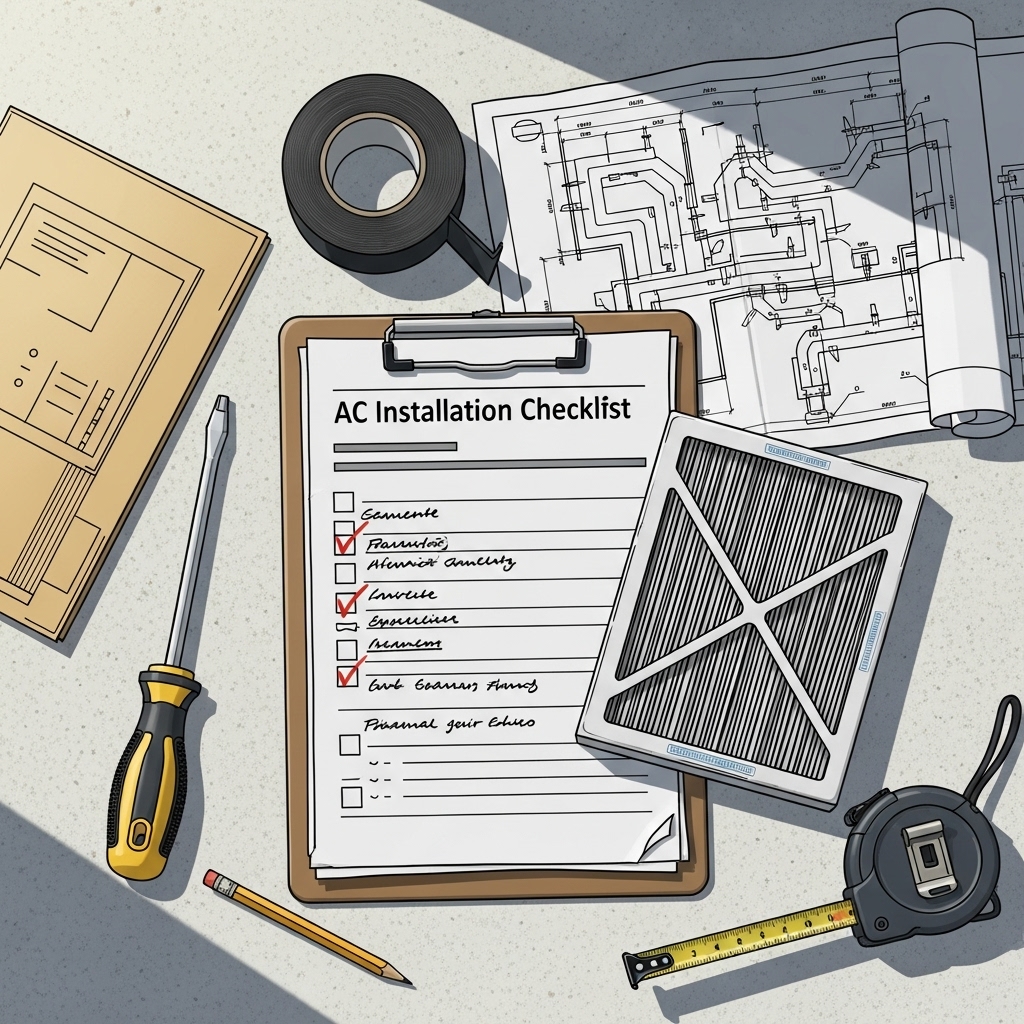
Successful air conditioning installation is the difference between a system that merely runs and one that delivers quiet, even, energy-smart comfort every day of summer in Skokie, Illinois. A thorough checklist keeps the project on track, prevents costly oversights, and ensures your new equipment reaches its full potential. Use the sections below before, during, and after installation to verify that each task is completed and documented. If you are just beginning and want to understand what high-quality workmanship includes, look into professional air conditioning installation standards so you can align your checklist with proven best practices.
This guide is organized around planning, site preparation, installation day steps, commissioning, and follow-up. Work through it sequentially, but also keep an eye out for improvements you can make when ducts are accessible and equipment is being replaced.
Planning and Design Checklist
- Define goals: humidity control, noise reduction, even temperatures, and efficiency.
- Collect home data: square footage, window types, insulation levels, and sun exposure.
- Perform a room-by-room load calculation; avoid rules of thumb.
- Assess ducts: measure static pressure and verify trunk and branch sizing.
- Select matched equipment with staging or variable speed to handle part-load conditions.
- Choose filtration: a media cabinet or other low-resistance solution that fits your airflow targets.
- Confirm thermostat compatibility and humidity features.
- Plan outdoor unit location for airflow, sound, and service access.
- Review permit requirements and inspection timelines in your jurisdiction.
Documenting these items creates a shared roadmap that reduces confusion and change orders. Good planning also reveals opportunities for small upgrades that yield big comfort gains, like enlarging returns or improving duct insulation.
Site Preparation Checklist
- Clear access to the mechanical area and create floor protection paths.
- Verify electrical capacity and identify breaker space for the condenser circuit.
- Prepare a level, well-drained pad site away from downspouts and bedroom windows.
- Plan line-set routing with minimal bends; protect penetrations against air and water.
- Gather materials for duct sealing and transitions, including mastic and appropriate fittings.
- Ensure a code-compliant disconnect location and dedicated circuit protection.
- Stage condensate protection: emergency pan, float switch, and clean drain path.
These steps reduce surprises on installation day, helping crews work efficiently and accurately. They also streamline inspections because key safety items are addressed from the outset.
Installation Day Checklist
- Recover refrigerant from the old system safely and dispose of equipment responsibly.
- Remove old components without damaging existing ducts or the furnace cabinet.
- Set indoor coil level, confirm trap configuration, and align transitions smoothly.
- Place the outdoor unit on a stable pad with correct clearances on all sides.
- Braze line sets with nitrogen flow; pressure test the system before evacuation.
- Install a code-compliant disconnect and verify grounding and conductor sizing.
- Route low-voltage wiring neatly; label connections for future service.
- Seal duct joints with mastic and insulate runs in unconditioned spaces.
- Verify return pathways and correct any restrictions or undersized grilles.
- Clean the work area and remove debris to keep coils and fans free of obstructions.
Attention to detail during these steps directly influences performance. Smooth transitions and sealed joints cut noise, boost airflow, and protect indoor air quality. Proper clearances and level placement defend against vibration and maintain service access.
Commissioning and Verification Checklist
- Evacuate the system with a micron gauge to a deep vacuum verified for tightness.
- Charge by weight to manufacturer specifications and fine-tune with superheat/subcooling.
- Measure total external static pressure and compare to blower limits.
- Set target airflow in CFM per ton, accounting for dehumidification needs.
- Check supply and return temperature split; confirm coil performance.
- Configure thermostat staging, blower ramps, and humidity features.
- Balance room airflow and verify comfort in known hot or cold spots.
- Document all start-up readings for your records and future service.
Commissioning transforms a collection of parts into a high-performing system. Without it, even the best equipment will underperform, especially during Skokie’s humid peaks when latent removal matters most.
Comfort Optimization and Air Quality
While the system is open, consider upgrades that elevate comfort beyond the basics. A media filter cabinet keeps airflow high while capturing fine particles. Return enlargements reduce noise and improve distribution. If your home suffers from temperature swings between floors, zoning can align airflow with need and tame hot upstairs rooms during summer afternoons.
Ventilation is another consideration. Introducing controlled fresh air maintains indoor freshness and reduces the burden of pollutants and moisture. Where appropriate, coordinate ventilation with the cooling system so the two work together rather than at cross purposes.
Skokie Climate Considerations
Skokie’s summer humidity requires careful airflow and coil selection. Slightly lower airflow per ton can enhance dehumidification when matched to coil design, but it must stay within manufacturer limits. Shaded outdoor placements can reduce condenser temperature rise, while thoughtful line-set routing protects insulation from UV and seasonal temperature swings.
Neighborhood density also makes sound a priority. Variable-speed systems and strategic placement reduce outdoor noise. Indoors, smooth ducts and generous returns let the blower work quietly, even at higher speeds during peak heat.
Maintenance and Ownership Checklist
- Change or inspect filters monthly during peak season.
- Keep the outdoor coil clear of debris, vegetation, and cottonwood fluff.
- Test the condensate safety switch at the start of summer.
- Schedule spring and fall checkups to verify charge, airflow, and controls.
- Monitor comfort and noise; note any changes for your technician.
- Register warranties and store commissioning documents where you can find them.
Consistent maintenance protects your investment and preserves efficiency. It is easier to keep a well-installed system in top shape than to rescue a neglected one during a heat wave.
Common Gaps the Checklist Catches
Rushed installations often skip key details: no micron gauge during evacuation, no airflow measurement, or mismatched thermostat settings. Your checklist counters that by requiring documentation. Another gap is return air; closed-door bedrooms without returns or transfer paths can starve the system and amplify noise. Build those checks into your process so they are never overlooked.
Finally, many projects miss opportunities for small, high-impact improvements—like sealing a leaky chase or upsizing a return—because crews are focused on equipment swap speed. When you use a comprehensive list, you make room for the work that elevates comfort.
Mid-Project Review
Halfway through, pause to confirm progress against the plan. Are line sets insulated and protected? Are transitions smooth and sealed? Are return pathways adequate? This is also a good moment to revisit your goals and verify that the chosen thermostat and filtration still match your needs. For visual examples of quality outcomes, compare your work to best-practice air conditioning installation checklists used by top contractors.
Communicate openly about any surprises, such as hidden duct restrictions or electrical constraints. Adjustments are easier midstream than after commissioning.
Frequently Asked Questions
Q: How long should installation and commissioning take? A: Most replacements fit into a day, while systems with duct changes or zoning may need an extra day to properly seal, balance, and test.
Q: Do I need new ducts to install central air? A: Not always. Many homes benefit from targeted improvements—sealing, return enlargements, and better transitions—without full replacement.
Q: What proves the system is set up correctly? A: A commissioning report with micron levels, charge data, static pressure, airflow, and temperature split provides objective verification.
Q: How do I keep upstairs rooms cooler? A: Balance airflow to favor upper floors during peak heat, consider zoning, and ensure attic insulation and sealing are up to par.
Q: Are permits required? A: Local jurisdictions commonly require permits and inspections for replacements and new installations, ensuring safety and compliance.
Q: What maintenance matters most? A: Regular filter changes, a clean outdoor coil, clear condensate drains, and seasonal tune-ups keep performance high.
Start Your Project with Confidence
With a clear checklist and a focus on measured performance, your new system can deliver quiet, even comfort throughout Skokie’s hottest months. Line up your plan, verify each step, and protect the details that matter—airflow, charge, and controls. When you are ready to move from planning to action, partner with pros who follow documented procedures and stand behind their work. For guidance grounded in proven methods, rely on professional air conditioning installation and enjoy a smooth, successful project from start to finish.