Navigating air conditioning installation requirements in Illinois involves more than choosing a condenser and coil. You need to account for permits, energy code, mechanical and electrical standards, manufacturer instructions, and practical details that ensure durability and safety. To orient yourself before you start, consult trustworthy primers on air conditioning installation so you can align your plan with statewide and local expectations. The sections below summarize common requirements and best practices so you can approach your project with confidence.
Permits and Inspections
Most Illinois municipalities require permits for new or replacement air conditioning systems. The permit process typically covers mechanical and electrical work and may include refrigeration piping. Expect one or more inspections, such as rough-in and final. Inspectors verify code compliance, safety, proper equipment matching, and adherence to manufacturer instructions. Keep documentation accessible: submittals, AHRI match sheets, wiring diagrams, and product manuals can streamline inspections.
Mechanical Requirements
Mechanical codes address equipment placement, airflow, condensate management, and ventilation considerations:
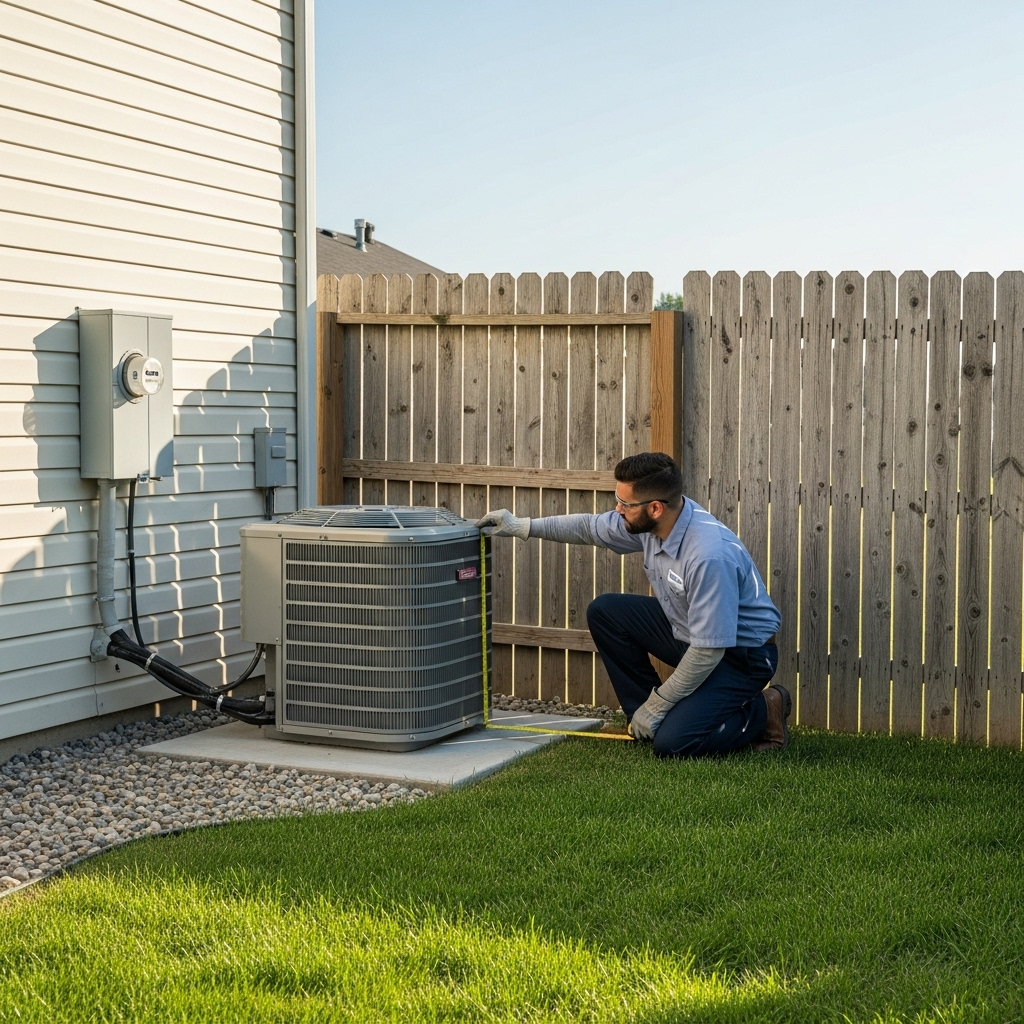
- Location and Clearances: Condensers must maintain minimum clearances for airflow and service; avoid exhaust vents, dryer outlets, and confined corners.
- Combustion Air (If Using a Furnace): Follow manufacturer and code requirements for sealed combustion and venting; keep AC coil access unobstructed.
- Duct Sealing and Insulation: Seal ducts with mastic or UL-181 tape; insulate ducts in unconditioned spaces to prevent energy loss and condensation.
- Condensate Disposal: Provide a primary drain with slope and an auxiliary drain or shutoff device to protect against overflow.
Electrical Requirements
Electrical compliance ensures safe operation and serviceability. Key points include:
- Dedicated Circuits: The condenser and air handler require properly sized circuits with overcurrent protection per nameplate data.
- Disconnects: Install a weather-rated disconnect within line of sight of the outdoor unit for safe servicing.
- Grounding and Bonding: Follow NEC requirements; torque lugs to specifications and verify continuity.
- Conductor Sizing: Select wire gauge for ampacity and voltage drop; protect conductors in approved raceways when exposed to damage.
Energy Code and Efficiency
Energy codes influence equipment efficiency and the quality of the building envelope. In Illinois, local adoption may vary, but common requirements include minimum efficiency ratings and duct leakage limitations in certain scenarios. Even when testing is not mandated, sealing ducts and ensuring adequate insulation will reduce operating costs and improve comfort. Choose AHRI-matched equipment to confirm that listed efficiencies are achieved in real-world pairings.
Manufacturer Instructions as Code
Most codes treat manufacturer instructions as part of the enforceable standard. Follow specified clearances, line set sizes and lengths, charging methods, and airflow requirements. Failure to comply can void warranties and cause inspection failures. When conflicts arise, consult the authority having jurisdiction (AHJ) for direction and document any approved deviations.
Site Design and Noise
Sound considerations are especially important in dense neighborhoods. Position the condenser to minimize noise toward bedrooms and property lines. Use vibration isolators where appropriate and maintain clearances that prevent recirculating hot discharge air. Ensure the pad is level and resistant to frost heave or settling that could stress refrigerant lines.
Ductwork Standards
Comfort hinges on airflow. Duct systems should be sized using Manual D principles with attention to total effective length, fitting losses, and target static pressure. Provide adequate return pathways in rooms with closing doors to prevent pressure imbalances. Install filter cabinets sized for low pressure drop and accessible for regular maintenance. Seal ducts and test pressures during commissioning to verify that airflow meets equipment specifications.
Refrigerant Piping and Environmental Considerations
Use line set diameters and lengths within manufacturer guidelines to maintain oil return and system capacity. When brazing, purge with nitrogen to prevent scale formation that can clog TXVs. Pressure test with dry nitrogen before evacuation. Handle refrigerants responsibly, following EPA regulations for recovery and disposal. Properly insulating suction lines prevents condensation and energy loss.
Condensate Drainage
Install a primary drain with a consistent slope and an auxiliary drain or a float switch to protect against overflow. Discharge condensate to an approved location to avoid damage to building materials, sidewalks, or landscaping. In tight mechanical spaces or basements without gravity drainage, use a rated condensate pump with a check valve and service access.
Controls and Thermostats
Controls should match the complexity of your equipment. Multi-stage and variable-speed systems require compatible thermostats and sometimes additional sensors or dehumidification terminals. Program thermostats for staged cooling and humidity setpoints. Label all low-voltage wiring clearly to avoid service confusion and to pass inspection without rewiring.
Commissioning Requirements
Commissioning validates that the installation meets design intent. Inspectors and manufacturers expect documented measurements: static pressure, temperature split, superheat, subcooling, blower speed, and electrical readings. Record model and serial numbers, AHRI match data, and thermostat programming. Provide this documentation to the homeowner along with warranty registration instructions.
Homeowner Education
Orient the homeowner on filter changes, thermostat operation, and drain safety features. Provide a brief guide for seasonal maintenance and signs that indicate the need for service, such as ice on the coil, unusual noise, or water near the air handler. Encourage annual maintenance aligned with Illinois’s cooling season to keep efficiency and reliability high.
Common Errors That Trigger Inspection Failures
- Improper Line Set Size or Length: Reduces capacity and can harm compressors.
- Missing or Inadequate Disconnects: A safety hazard that will fail inspection.
- Leaky or Uninsulated Ducts in Attics: Leads to energy waste and comfort complaints.
- Poor Condensate Planning: Causes water damage and microbial growth risks.
Mid-Project Compliance Check
Before charging the system, review each requirement and verify that documentation is ready for the inspector. If you discover constraints—such as an undersized return or insufficient pad clearance—address them now. At this stage, many installers look back at professional guidelines on air conditioning installation to confirm that commissioning steps and recordkeeping align with best practices and local expectations.
FAQ
Q: Are permits always required in Illinois? A: Many municipalities do require permits for AC replacement or new installations. Check with your local building department for exact rules.
Q: What documentation should I keep? A: AHRI match sheets, manuals, wiring diagrams, permit paperwork, and commissioning logs are valuable for inspections, warranty, and resale.
Q: How do I satisfy energy code concerns? A: Choose matched equipment with compliant efficiencies, seal ducts thoroughly, and ensure the building envelope is insulated and air sealed appropriately.
Q: What if my ducts are undersized? A: Consider enlarging returns, optimizing trunks and branches, and selecting filters with higher surface area to reduce static pressure.
Q: Who is responsible for refrigerant recovery? A: EPA rules require certified technicians to handle recovery and charging.
Move Forward with Confidence
Understanding Illinois requirements will help you plan an installation that passes inspection and performs well for years. If you want professional support or a compliant, turnkey experience, contact a trusted local provider. You can also learn more about planning, design, and commissioning for high-quality air conditioning installation when you are ready to take the next step.