
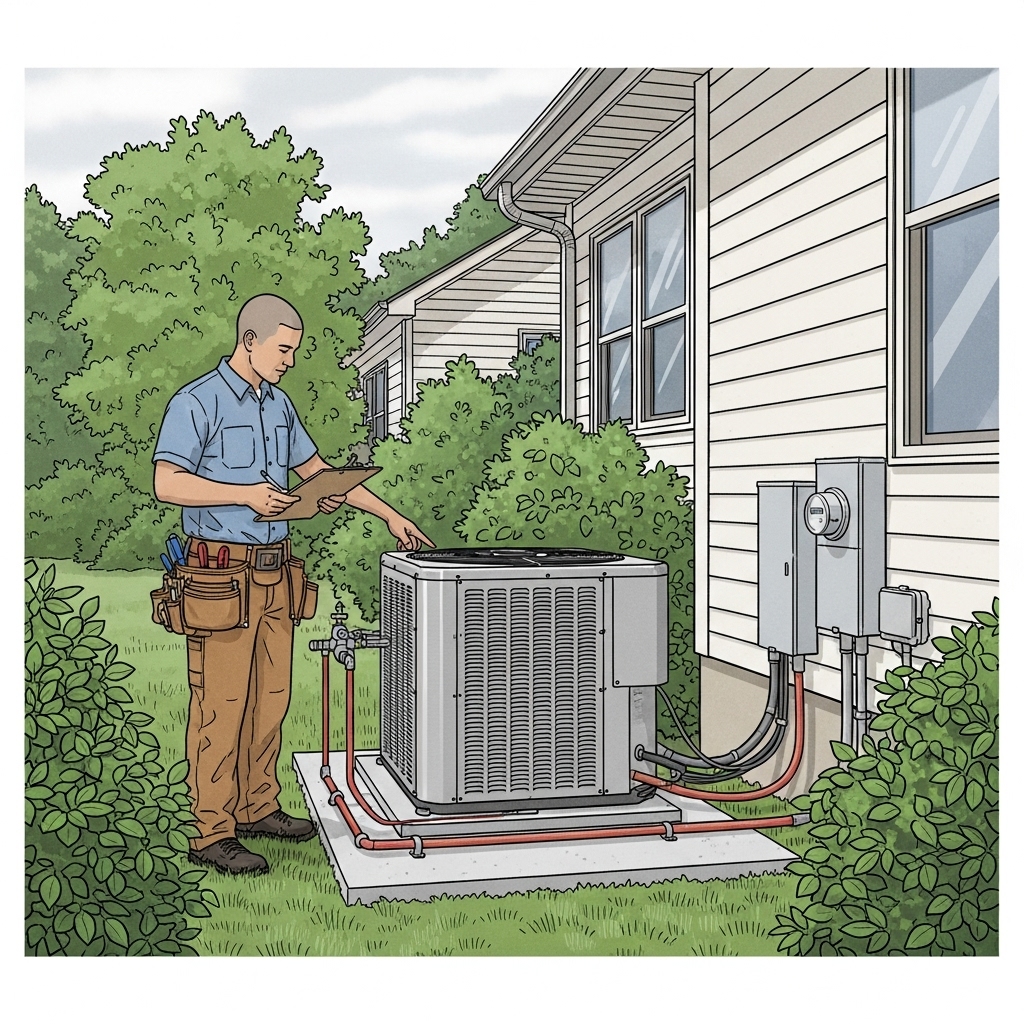
Use this comprehensive checklist to guide a successful AC install in your Illinois home. From climate-specific planning to final commissioning, each item below supports comfort, efficiency, and long-term reliability. If you want more context on techniques and options before you begin, you can review expert overviews of air conditioning installation to better understand each step in the process.
Planning and Documentation
- Confirm local permits and inspections required by your Illinois municipality; collect application forms and timelines.
- Record existing equipment details (model/serial numbers, breaker sizes, line set diameter, duct dimensions).
- Photograph current duct connections, electrical paths, and condensate routes for reference.
- Review energy code and any local amendments related to mechanical installations and electrical work.
Load Calculation and System Design
- Perform a Manual J load calculation accounting for insulation, windows, orientation, occupancy, and ventilation.
- Size ducts with Manual D principles; calculate target airflow and static pressure.
- Select AHRI-matched condenser, evaporator coil, and air handler or furnace/coil combination.
- Decide on staging or variable-speed equipment and compatible thermostat controls.
Site Preparation
- Choose an outdoor location with clearances per manufacturer specifications and local code.
- Set a level, stable condenser pad; ensure proper drainage around the pad to avoid settling.
- Plan a protected line set route with minimal bends and secure supports.
- Verify adequate indoor service access for coil, filter, and blower.
Electrical and Controls
- Confirm panel capacity and breaker sizing requirements for the new condenser and air handler.
- Install a weather-rated disconnect within line of sight of the outdoor unit.
- Route and label low-voltage wiring; confirm thermostat compatibility with stages and dehumidification.
- Check bonding and grounding; tighten all lugs to manufacturer torque specs.
Ductwork and Airflow
- Inspect all ducts for leaks, damage, and improper sizing; repair or replace as needed.
- Seal joints with mastic or UL-181 tape; insulate ducts in unconditioned spaces.
- Balance supply and return airflow; ensure adequate return paths for closed-door operation.
- Install a filter cabinet with enough surface area to keep pressure drop low over time.
Refrigerant Piping and Coil
- Confirm line set diameter and length are within manufacturer guidelines.
- Braze with nitrogen purge to avoid oxidation; use a wet rag or heat-block where necessary.
- Install a liquid line filter drier correctly oriented; replace if the system is opened later.
- Pressure test the system with dry nitrogen before pulling a vacuum.
Condensate Management
- Install a primary drain with proper slope and a secondary drain or float switch.
- Test gravity drainage; if not possible, install a rated condensate pump with check valve.
- Route discharge to an approved location; avoid areas that can cause damage or mold.
- Insulate drain lines where sweating could occur to protect finishes.
Evacuation and Charging
- Use a micron gauge to verify a deep vacuum per manufacturer guidance.
- Weigh in refrigerant charge, adjusting for line set length when required.
- Check for leaks using appropriate methods; correct and retest before charging fully.
- Verify superheat and subcooling during operation to confirm proper charge.
Commissioning and Verification
- Measure supply/return temperature split; record compressor amperage and blower RPM.
- Confirm total external static pressure and compare with blower tables for target CFM.
- Validate thermostat programming, staging thresholds, and dehumidification settings.
- Document all readings and photographs for the homeowner and for future service.
Homeowner Orientation
- Explain filter changes, thermostat operation, and drain safety features.
- Provide warranty information and registration instructions.
- Review seasonal maintenance steps and recommended service intervals.
- Share contact details for service and emergency questions.
Illinois-Specific Considerations
- Plan for high summer humidity; focus on run-time strategies and ventilation.
- Prepare for cottonwood and debris season by scheduling coil cleaning at least yearly.
- Verify condensing unit placement respects property lines and noise concerns.
- Check local code nuances, such as condensate discharge rules and required pad heights.
Mid-Project Review
Halfway through the work, pause to validate the design against what you are seeing on site. If ducts are more restrictive than expected or service clearances are tighter, adjust the plan. At this stage, revisiting professional references on air conditioning installation can help you confirm charging methods, static pressure targets, and documentation standards.
FAQ
Q: What size AC do I need? A: Size is determined by a Manual J load calculation; avoid estimating by square footage alone.
Q: Can I reuse my thermostat? A: If it supports your equipment stages and dehumidification features, yes. Otherwise, upgrade for compatibility and better control.
Q: How often should filters be replaced? A: Check monthly during peak season and change when visibly dirty or when pressure drop increases.
Q: Do all towns in Illinois require permits? A: Requirements vary. Many municipalities do require permits and inspections for safety and code compliance.
Q: What is a good temperature split across the coil? A: Typically 16–22°F under normal indoor humidity and airflow, but verify with manufacturer guidance.
Final Notes and Next Steps
With this checklist, you can move confidently from planning to commissioning while meeting Illinois code expectations and comfort goals. If you prefer expert assistance or a complete turnkey experience, consider partnering with a trusted local provider. You can take the next step and explore services focused on precise air conditioning installation so your home is ready for the next heat wave.