Introduction
Keeping an air conditioner running smoothly in Illinois is a year-round commitment that pays you back in comfort, reliability, and energy efficiency. Between humid summers along the Mississippi and chilly nights near Lake Michigan, your system is exposed to large swings in temperature and moisture. The good news is that a thoughtful maintenance routine can prevent many surprise breakdowns. In this guide, you will learn exactly how to take care of your system the right way, when to call an expert, and how to build habits that make home cooling simple and effective.
We will cover safety, tools, step-by-step cleaning, and testing. You will also discover how local weather affects filters, coils, and condensate lines, plus how to plan your calendar around Illinois’s shoulder seasons. If you are new to home care or have never tuned up an AC before, start small with basics and gradually add more detailed checks. If you decide you want a professional hand at any point, you can explore trusted air conditioning maintenance services that align with your needs.
Why Illinois Climate Changes Your Maintenance Approach
Illinois experiences hot, humid summers that test dehumidification performance and stress outdoor components. Pollen, cottonwood fluff, and grass clippings can cling to condenser fins, choking airflow and making the compressor work harder than necessary. At the same time, spring rains can splash mud and debris into the unit’s base, and high winds can blow leaves behind panels and into corners where they trap moisture. These local realities call for more frequent cleaning of the outdoor unit and vigilant filter replacement indoors.
On the indoor side, humidity peaks in July and August push your system to condense a lot of moisture. That water drains through a condensate line that can become slimy with biofilm or clogged with dust, lint, or algae. A blocked drain can cause water to back up into the pan and lead to ceiling stains, musty odors, and float-switch shutdowns. Because of this, Illinois homeowners should flush drains more often during the midsummer months and double-check the pan for standing water after big cooling cycles.
Finally, shoulder seasons in spring and fall present ideal opportunities to perform deeper maintenance. You can shut the unit off for an afternoon without sacrificing comfort, take your time cleaning coils, and test everything in mild weather. Scheduling the bulk of your yearly care in April or early May, with another review in late August, sets you up for a trouble-free summer and a confident transition to heating season.
Safety First and Tools You’ll Need
Before opening panels or touching wiring, turn off power at the thermostat and at the outdoor disconnect or breaker. Confirm that the fan is not running and listen for silence around the compressor. Wear light gloves to protect your hands from sharp coil fins, and eye protection if you are rinsing coils. Never spray water into electrical compartments, and avoid using aggressive cleaners that may damage aluminum fins or painted housings.
Basic tools make the job manageable. Keep a flashlight, soft-bristle brush, a garden hose with gentle spray, a small plastic scoop for debris, paper towels, and a wet/dry vacuum for condensate line cleaning. A digital thermometer helps you measure supply and return air temperatures to confirm performance. If you have pets or allergies, stock extra high-quality filters sized for your return grille or cabinet. A small level is handy for checking the condenser base, and a simple screwdriver can remove many access panels.
With safety and tools covered, you’re ready to follow a repeatable routine. The goal is not perfection but consistency—small, regular actions prevent most surprises and help you recognize small changes before they become big issues.
Step-by-Step Maintenance for Illinois Homes
Power down the system fully. Set your thermostat to Off and flip the outdoor disconnect or breaker. Waiting a few minutes allows pressures to equalize, reducing stress when the unit restarts later. Use this quiet time to tidy around the indoor unit and clear clutter that may restrict return airflow.
Replace or clean the air filter. Slide the old filter out with the airflow arrow direction in mind, note the size, and install a clean filter of the same size and MERV rating appropriate for your equipment. In Illinois, dense spring pollen and summer construction dust can load filters quickly, so check monthly in peak season even if the packaging suggests longer intervals. A clean filter protects the evaporator coil, improves airflow, and helps the blower work efficiently.
Inspect return and supply registers. Walk through your home and make sure furniture or rugs are not blocking vents. Dust the grilles gently and vacuum any visible lint. Balanced airflow between returns and supplies helps your system cool evenly and avoids hot or cold spots, especially in rooms with a lot of sun exposure.
Open the indoor cabinet if accessible. Without touching wiring, look for signs of dust on the blower wheel or streaks on the evaporator coil. Light dust on the cabinet edges is normal; heavy buildup on the wheel fins, however, indicates overdue cleaning. If you see icing residue or a damp cabinet, that can point to airflow restrictions or low refrigerant. Homeowners should stop short of disassembling blower assemblies; visual checks are enough to inform your next steps.
Clear the outdoor condenser area. Trim vegetation at least a couple feet from all sides and above the unit. Sweep away leaves, seed pods, and grass clippings. Gently scoop debris from the base pan and ensure the weep holes are open so rainwater can drain. Illinois yards often accumulate cottonwood fluff in late spring; removing it promptly preserves condenser airflow through the hottest weeks.
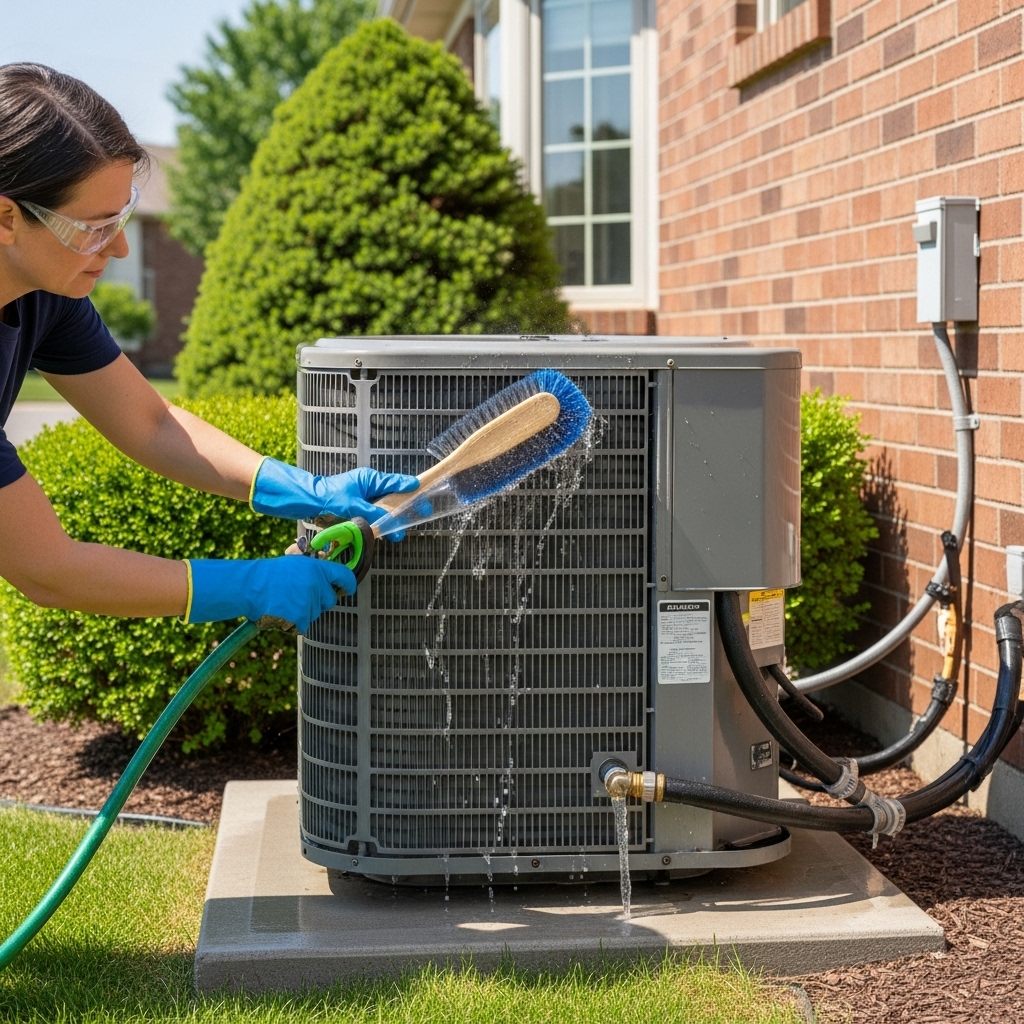
Clean the condenser coil carefully. Using a garden hose on a gentle setting, rinse from the inside out if the fan shroud allows access. If not, rinse from outside, moving water straight through the fins rather than at an angle. Avoid high pressure, which can bend fins and reduce performance. A soft brush can loosen stubborn dirt before rinsing. Let the coil drip dry while you address the next tasks.
Check the fan blades and motor housing. Look for cracked blades, wobble, or oil stains around sealed bearings. Listen for scraping or grinding sounds when you spin the fan gently by hand with the power off. Any unusual resistance or noise is a sign to schedule service before the summer’s hottest stretch begins.
Confirm the condenser is level and stable. Illinois freeze-thaw cycles and soil movement can tilt pads over time. A unit that leans can cause compressor stress and lead to oil migration issues. If the tilt is minor, you can adjust the base by adding compacted gravel beneath the pad edges; for major shifts, consult a professional to relevel or replace the base.
Clean the condensate drain. Locate the drain line near the indoor coil and check the trap for standing water or slime. Use a wet/dry vacuum at the outdoor drain termination for a minute or two to clear soft clogs. Pour a small amount of plain warm water into the drain port to verify flow. During peak humidity, check the line every few weeks to prevent backups.
Inspect insulation on refrigerant lines. The larger suction line should be insulated along its outdoor run. Replace cracked or missing insulation to prevent condensation drip and efficiency loss. This quick fix helps the system maintain proper temperatures and reduces unnecessary energy use in humid Illinois weather.
Seal obvious air leaks around ducts. If your air handler is in a basement or attic, feel around seams and connections for leaks while the blower runs during a later test cycle. Visible gaps can be addressed with duct mastic or foil tape, while larger issues may require professional sealing. Reducing leakage boosts comfort in rooms furthest from the air handler.
Reset power and test. Restore the breaker or disconnect and set the thermostat to Cool with a reasonable set point. Allow the system to run for 10 to 15 minutes. During this time, walk outside and listen for smooth compressor and fan operation, then return indoors to assess airflow and temperature.
Measure a quick temperature split. Use your thermometer to measure air at the return and at the closest supply register. A typical cooling system will show a difference in the range that indicates healthy heat transfer, though exact numbers vary with humidity and equipment. If the split is unusually low or high, investigate airflow, filter condition, and coil cleanliness before assuming a refrigerant problem.
Evaluate room-by-room comfort. Illinois homes vary widely in construction, from historic brick to newer builds with different insulation standards. Note any rooms that lag behind in cooling. Common causes include blocked vents, duct leaks, or solar heat gain through large windows. Strategic shade or light-reflecting window treatments can complement mechanical maintenance.
Fine-Tuning Performance
After the basics, consider small improvements that add resilience. Calibrate the thermostat if your model allows it, or simply compare displayed temperature to a reliable thermometer. Confirm that fan settings are appropriate; running the fan continuously can re-evaporate moisture in high humidity and reduce perceived comfort, while Auto mode allows proper dehumidification during cooling cycles.
Listen for short cycling, where the system starts and stops frequently. This behavior can indicate an oversized system, airflow problems, thermostat placement issues, or even icing on the evaporator coil. Short cycling reduces efficiency, increases wear, and can be more noticeable during shoulder-season days with moderate temperatures.
Mid-season, revisit the outdoor coil for a light rinse, particularly after storms or lawn work. Pollen and dust accumulation tends to be highest between late May and early July. A five-minute rinse can recover coil performance and maintain stable head pressure, reducing strain during heat waves. This quick touch-up is one of the most effective homeowner actions you can take.
If you prefer having a pro verify your work, mid-summer is a great time to schedule a checkup. A technician can measure refrigerant parameters, inspect electrical components, and validate airflow with specialized tools. If you decide on outside help, review options for professional air conditioning maintenance to complement your routine and keep the system under a consistent care plan.
Seasonal Schedule That Works in Illinois
Early spring: Clear the outdoor unit thoroughly before the first real warm spell. Replace the filter, flush the condensate drain, and test run the system on a mild day so you can address any performance concerns with less time pressure. This is also an ideal moment to assess thermostat programming ahead of long summer days.
Mid-summer: Perform a quick outdoor rinse and indoor filter check. Humidity is highest now, so confirm that the drain is flowing freely and that there are no musty smells around the air handler. If you’ve been doing a lot of yard work, consider removing the top grille to gently brush any trapped debris from the coil’s interior surfaces, taking care not to stress fan wiring.
Late summer: Before switching your focus to heating, do one more filter replacement and visual inspection. Catching small issues now prevents headaches during the first frost when you’ll need the furnace and won’t want any downtime caused by shared components like the blower motor.
When DIY Isn’t Enough
There are clear limits to safe homeowner maintenance. If you detect electrical arcing, smell burning odors, see ice forming on the refrigerant lines, or notice water leaks you cannot trace, shut the system down and schedule service. Likewise, persistent performance issues after basic cleaning may indicate deeper problems with refrigerant charge, metering devices, contactors, or capacitors that require professional diagnostics and tools.
Consider professional help if your home consistently struggles with humidity despite long runtimes, or if the temperature split test suggests poor heat transfer even after you’ve verified airflow and coil cleanliness. Homes with recent remodeling or duct changes may also benefit from airflow balancing and duct sealing performed by a qualified technician.
Finally, if your system is older, a yearly professional inspection can prolong its service life by catching wear on motors, bearings, and electrical connections before they fail at the peak of summer demand. Combining homeowner care with periodic expert oversight provides the best of both worlds—control and convenience.
Frequently Asked Questions
Q: How often should I change my AC filter during Illinois summers?
A: Check monthly during peak cooling. Many homes do well with a one to two month replacement schedule in July and August, especially with pets or high pollen. In spring and fall, you can extend intervals if the filter is still clean.
Q: Is rinsing the outdoor coil with a garden hose safe?
A: Yes, as long as the power is off and you use gentle pressure. Aim straight through the fins and avoid spraying electrical panels. Regular rinsing prevents airflow restrictions that stress the compressor.
Q: What temperature difference should I see between return and supply?
A: A healthy system typically shows a notable drop at the supply compared to the return. Exact values vary with humidity and equipment. If the difference seems far off from past readings, focus on airflow first—filter, coil, and fan cleanliness—before assuming a refrigerant issue.
Q: Why does my condensate drain clog so often?
A: High humidity promotes biofilm growth, and dust in return air can settle in the trap. Regular vacuuming at the drain outlet and periodic flushing with plain water helps. If problems persist, ask a professional about additional safeguards like float switches.
Q: Can I run the system while painting or sanding indoors?
A: It is better to switch to Fan Only or turn the system off and use localized ventilation. Fine dust can overwhelm filters and coat the evaporator coil. Replace the filter immediately after dusty projects.
Q: What signs mean I should call a professional immediately?
A: Burning smells, repeated breaker trips, ice on the lines, unusual buzzing from the compressor, or water leaking from the air handler warrant shutting the system down and scheduling service.
Q: Does shading the condenser help?
A: Light shading that does not impede airflow can modestly improve performance. Maintain wide clearances on all sides and above the unit to avoid trapping heat or blocking service access.
Q: How can I reduce hot rooms on the second floor?
A: Ensure supply and return pathways are clear, close gaps around duct connections, and verify attic insulation and air sealing. Strategic window treatments and balanced airflow adjustments can also help.
Schedule Your Maintenance Today
A little attention at the right time makes summer cooling predictable and comfortable. Start with a filter change, a careful coil rinse, and a quick drain flush, then verify performance with a short test cycle. If you want an extra layer of assurance or prefer a full professional tune-up, consider partnering with a trusted team that understands Illinois homes and weather.
Take the next step toward a smoother season, better airflow, and dependable comfort by scheduling expert air conditioning maintenance at a convenient time. With a consistent plan in place, you can face heat waves confidently and enjoy steady, quiet cooling all summer long.