A smart schedule is the secret to keeping your cooling system reliable through every phase of a Skokie summer. Instead of scrambling during the year’s first heat wave, you can plan touchpoints that prepare the equipment in spring, confirm performance in midsummer, and shut things down neatly in fall. This guide lays out a clear calendar with tasks you can tackle yourself and checkpoints best handled by a professional. To start on solid footing, commit to a recurring plan for air conditioning maintenance so your system is tuned before hot, humid weather arrives.
Skokie’s climate presents a unique mix of challenges: rapid temperature swings, substantial humidity, and debris from spring blooms and summer storms. Equipment that breezed through May can struggle in July if airflow and drainage are not dialed in. By aligning maintenance with local weather patterns, you can protect your investment while keeping indoor conditions comfortable and consistent.
Late Winter: Preparation and Planning
Use late winter to map out your year. Set reminders for the first warm week of spring, the midpoint of summer, and the first cool week of fall. Order a season’s worth of air filters so replacements are on hand. If you had comfort issues last year—warm upstairs bedrooms, persistent humidity, or short cycling—collect notes and discuss them with a technician during your next tune-up.
Now is also a good time to review your thermostat. Confirm that schedules reflect your household routine and that setback periods still make sense. Replace thermostat batteries if applicable and ensure the device sits away from direct sun, lamps, or electronics that may skew readings.
Early Spring: System Readiness
As temperatures climb into the 60s, verify that your outdoor unit is level and unobstructed. Winter frost heave can tilt the condenser pad, stressing refrigerant lines and compressor bearings. Clear leaves, branches, and storm debris. Inspect the refrigerant line insulation and replace any missing or cracked sections to prevent sweating and energy loss. Inside, replace the air filter, open supply registers, and vacuum return grilles so clean air can move freely.
Power the system briefly to test operation. Listen for unusual startup sounds and observe whether the condenser fan and indoor blower run smoothly. If breakers trip or the unit struggles to start, stop and call a professional to diagnose electrical components like capacitors and contactors before peak demand arrives.
Mid to Late Spring: Professional Tune-Up Window
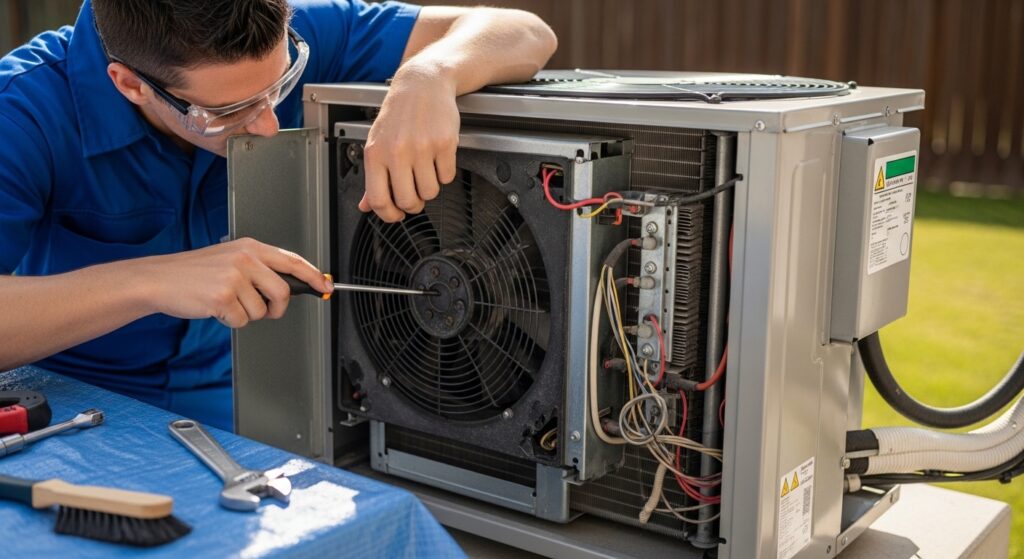
Schedule your professional tune-up before the busiest part of the season. A comprehensive visit typically includes verifying airflow, measuring refrigerant pressures and temperatures, checking superheat and subcooling, cleaning the condensate drain, inspecting the blower wheel, and confirming electrical connections are tight. This is the time to address coil cleanliness so that the evaporator and condenser can reject and absorb heat efficiently throughout summer.
Coil cleanliness matters because dirt acts like insulation. Even a thin layer on the evaporator reduces dehumidification, allowing moisture to linger indoors. On the condenser, grime forces the system to work at higher head pressures, adding strain and increasing energy consumption. Proper cleaning and performance testing now prevent mid-season surprises.
June: Baseline Performance Check
Once the system has run consistently for a week or two, establish a baseline. Measure the temperature at a central return and compare it to the nearest supply. A split of roughly 15–20°F indicates healthy heat exchange. Record indoor humidity with a reliable hygrometer; a target in the 40–55% range is typical for comfort. If your readings are off, start with airflow—filter, registers, returns—before considering deeper causes.
Review thermostat schedules and make minor adjustments. If your home tends to gain heat in late afternoon, begin cooling a bit earlier so the system can maintain rather than chase setpoints. In multi-level homes, shift more airflow to upper floors during the day by adjusting dampers or partially closing lower-level supplies.
July: Mid-Season Tune and Inspect
July’s humidity and heat test any AC. Recheck your filter and clear condenser fins of cottonwood fluff using gentle water flow from the inside out. Confirm that the condensate drain is flowing and that the trap has water in it to seal against air movement. If you are noticing longer runtimes or lingering humidity, consider scheduling mid-season air conditioning maintenance to verify coil cleanliness, refrigerant charge, and blower settings.
This is also a good moment to inspect weatherstripping and sun control. Close blinds on west-facing windows during late afternoon, and use bathroom and kitchen exhaust to reduce interior moisture loads. Small envelope improvements can significantly ease your AC’s workload during peak conditions.
August: Comfort Balancing
As the summer wears on, fine-tune comfort room by room. Balance airflow by adjusting dampers or registers to nudge more cool air toward warm areas. Consider whether door undercuts and return paths allow air to flow back to the air handler when rooms are closed off. If certain spaces remain stubbornly warm, make a note to discuss duct modifications or zoning with a professional during your next visit.
Document your observations. Track temperatures and humidity across floors at various times of day. These notes form a valuable reference that helps your technician diagnose the root cause of imbalances—whether airflow restrictions, duct design, or equipment capacity.
September: Transition to Shoulder Season
As nights cool, your system cycles less often and dehumidification naturally improves. Use this lull to do a light clean. Replace the filter one more time, vacuum return grilles, and check the condensate line for any signs of algae growth. Outside, ensure nothing has collected against the condenser cabinet after summer storms.
If you had to make frequent thermostat adjustments over the summer to maintain comfort, evaluate whether schedule tweaks or minor hardware changes could help next year. A variable-speed blower, for instance, can improve latent moisture control by extending low-speed runtimes—something to explore with your technician during off-peak months.
October: Clean Shutdown
When it is time to turn the system off for the season, do so thoughtfully. Replace the filter to start next year fresh. Gently rinse the condenser coil from the inside out to remove dust and pollen. Trim shrubs and maintain two feet of clearance around the unit. Place a simple top cover over the condenser to keep leaves out, but do not wrap the whole cabinet, which can trap moisture and invite rodents.
Indoors, verify that the condensate drain is clear and dry. Turn off any auxiliary condensate pumps if they will not be used, and make sure the electrical disconnect remains accessible for future service. Store maintenance notes in a place you will remember so you can compare performance when spring returns.
Pro Tasks Versus DIY
Homeowners can confidently handle filter changes, grille cleaning, outdoor clearance, basic drain checks, and visual inspections. Professionals should handle coil cleaning, electrical testing, refrigerant measurements, blower adjustments, static pressure diagnostics, and any repairs involving sealed system components. This division of labor keeps you safe and ensures that complex tasks are performed with the right tools and training.
Frequently Asked Questions
Q: How often should I replace the filter in summer? A: Check monthly and change at least every 60–90 days, more often with pets or remodeling.
Q: What is a normal temperature split? A: Roughly 15–20°F between return and supply air under typical conditions.
Q: Why does my home feel humid even when it is cool? A: Low airflow, dirty coils, or oversized equipment can reduce dehumidification. Extended low-speed operation or professional adjustments may help.
Q: Is it okay to rinse the outdoor unit? A: Yes, with gentle water and the power off. Avoid high-pressure sprayers that can bend fins or drive water into electrical components.
Q: Should I close vents in unused rooms? A: Avoid closing many vents, which raises static pressure and can harm the system. Balance air carefully and improve the building envelope.
Q: What if my system short cycles? A: Short cycles can indicate electrical issues, refrigerant problems, or thermostat placement concerns. Schedule a professional diagnostic.
Take the Next Step
With a clear schedule in place, you can move through each season confident that your system is ready for the weather ahead. Keep filters fresh, maintain outdoor clearance, monitor humidity, and record performance so you can spot trends early. When you are ready for expert verification and deep cleaning, book professional air conditioning maintenance and enjoy steady comfort in every corner of your Skokie home.