Every Skokie, Illinois home benefits from a clear, thorough, and practical air conditioning maintenance checklist. With hot, humid summers and variable spring weather, a system that is clean, tuned, and tested stands up better to peak demand. A checklist helps you and your technician align expectations, verify results, and ensure nothing is missed. It also turns maintenance from a vague promise into a concrete, step-by-step process. If you are preparing for seasonal service, or designing a plan for your household, start with this comprehensive guide and make sure your provider is experienced with professional air conditioning maintenance for Midwestern homes.
Why a checklist matters
Air conditioners are complex. They move heat, manage moisture, and rely on precise electrical components to operate safely. A checklist organizes that complexity. It ensures important cleaning and testing tasks are performed in the right order, confirms that controls are functioning, and catches early signs of trouble before they grow more serious. For homeowners, a checklist is also a transparent record that demonstrates value and supports warranty requirements.
Preparation before your appointment
- Clear the area around the indoor air handler and outdoor condenser for easy technician access.
- Locate your thermostat, breaker panel, and any filter cabinets or return grilles.
- Note any symptoms: hot spots, humidity issues, rising energy bills, or unusual noises.
- Gather previous service reports to help your technician compare today’s readings with past performance.
Simple preparation saves time and helps your technician focus on high-value diagnostics and improvements.
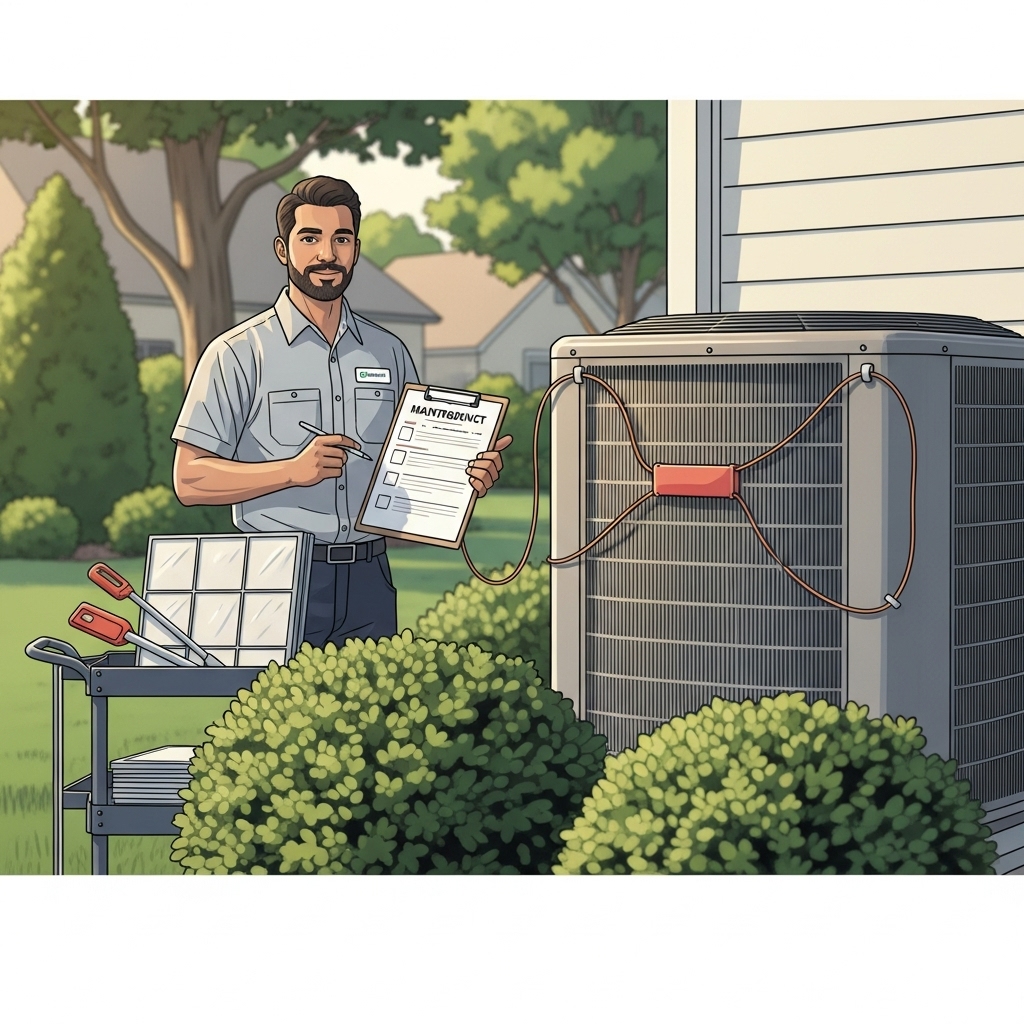
Exterior condenser checklist
- Shut off power at the disconnect and verify lockout for safety.
- Remove top cover as needed and clean debris from inside the cabinet.
- Wash the condenser coil gently from the inside out; straighten bent fins with a fin comb.
- Inspect the fan motor, blade balance, and mounting hardware for vibration and noise.
- Tighten electrical connections, test capacitors, and inspect the contactor for pitting or wear.
- Measure line and load voltage, start and run amperage, and compare to nameplate values.
- Check refrigerant line insulation and replace any deteriorated sections.
These steps reduce energy waste, lower compressor strain, and ensure proper heat rejection outdoors.
Indoor air handler checklist
- Verify power is off and remove access panels carefully.
- Inspect and clean the evaporator coil, ensuring unrestricted airflow and proper heat absorption.
- Examine the blower wheel for dust buildup and clean if needed; confirm motor bearings are smooth.
- Check the condensate drain pan, trap, and line, clearing blockages and adding treatment if appropriate.
- Replace or clean the air filter and confirm the correct size and MERV rating for your system.
- Inspect electrical connections, test capacitors, and examine control boards for signs of overheating.
- Confirm that all access panels, seals, and gaskets are properly reinstalled to prevent air leakage.
Proper indoor maintenance supports comfort, humidity control, and clean indoor air.
System performance checklist
- Restore power and set the thermostat to cooling mode for a supervised test run.
- Measure supply and return air temperatures to calculate temperature split across the coil.
- Record static pressure and compare to manufacturer limits to assess duct performance.
- Confirm refrigerant superheat or subcooling values fall within specification, indicating correct charge.
- Observe compressor behavior at startup and steady state to detect short cycling or hard starts.
- Verify thermostat calibration and scheduling features, including fan circulation options.
- Document final readings and note any recommendations for airflow or control adjustments.
Reliable numbers give you an objective picture of system health and a baseline for future service.
Homeowner maintenance checklist
- Check your filter monthly during peak summer usage and change it as needed.
- Maintain two feet of clearance around the outdoor unit, trimming shrubs and removing debris.
- Vacuum return grilles and supply registers to reduce dust that can settle on coils.
- Use smart thermostat schedules that match your routine to reduce unnecessary run time.
- Keep doors and windows closed while cooling and use shades to reduce heat gain on sunny days.
These steps enhance the results of professional service and help your system run smoothly.
Skokie climate considerations
The Skokie area experiences high humidity and bursts of pollen, which together can load filters quickly and promote biological growth in damp areas. Your checklist should include thorough condensate drain maintenance and attention to filter selection. Systems with variable-speed blowers may benefit from humidity control settings, which a skilled technician can calibrate for your home. Because storms can drop sticks and leaves into outdoor units, plan a mid-season check to clear debris and confirm proper operation after severe weather.
Documentation and communication
Ask your technician to provide a detailed, written report that includes measured values for temperature split, static pressure, voltage, amperage, and refrigerant parameters. Request photos of coil conditions when appropriate. Clear communication now makes future service faster and improves decision-making when your system reaches replacement age. Keep all records in a folder or digital file that you can share with any future providers.
Common issues the checklist can catch
- Weak capacitors that prevent the compressor or fan from starting reliably.
- Dirty evaporator coils that reduce cooling capacity and cause icing.
- High static pressure due to clogged filters or duct restrictions.
- Low refrigerant charge from slow leaks, indicated by abnormal superheat or subcooling.
- Condensate drain clogs that lead to leaks, odors, and humidity spikes.
- Loose electrical connections that create intermittent faults or overheating.
Finding these issues early prevents discomfort, protects your equipment, and reduces the chance of a peak-season breakdown.
Safety considerations
Air conditioning involves electricity, moving parts, and refrigerants. Skilled technicians follow lockout procedures, use proper gauges, and observe safe handling practices. Homeowners should avoid opening sealed panels, bypassing safeties, or adjusting refrigerant. If your system trips a breaker, smells like hot plastic, or develops ice on the lines, turn it off and call for service right away.
Middle-of-season checkpoint
In Skokie’s hottest months, a quick mid-season checkpoint can keep your system on track. Ask a technician to recheck coil cleanliness, drain performance, and critical electrical components. This small investment of time is especially helpful for systems that run long hours, homes with multiple pets, or properties near construction or heavy tree cover. If you are comparing options, look for teams known for thorough air conditioning maintenance that includes clear reporting and practical recommendations.
Frequently asked questions
Q: How often should I run through this checklist? A: At minimum, once per year in spring. Add a mid-season review if your home has high usage or environmental factors that load filters and coils.
Q: Can I clean the evaporator coil myself? A: It’s best left to professionals because coils are delicate and improper cleaning can cause damage or reduced performance.
Q: What filter rating should I choose? A: Use the highest MERV rating that does not raise static pressure beyond your system’s limits. A technician can measure and recommend the right balance.
Q: Do smart thermostats help? A: Yes, when properly configured. They support scheduling, humidity control features on compatible systems, and provide performance data.
Q: What is a normal temperature split? A: It varies by system and conditions, but many homes see 16–22°F when the system is clean, charged correctly, and airflow is within spec.
Q: Why does my AC run but the house feels humid? A: Dirty coils, low airflow, or an oversized system can reduce moisture removal. Maintenance and airflow tuning help humidity control.
Q: What are signs I need immediate service? A: Tripped breakers, burnt smells, water leaks, icing, or loud metallic noises require prompt attention.
Ready to put your checklist to work?
Turn this guide into action by scheduling a professional visit that follows a clear, measurable process. With the right partner, you will see better comfort, quieter operation, and reliable cooling during Skokie’s hottest days. When you are ready to move forward, schedule expert air conditioning maintenance and keep your home comfortable all season long.