A smooth, long-lasting residential air conditioning installation in Skokie, Illinois starts long before the condenser lands on its pad. The best outcomes come from planning, documentation, and quality control at every step—from load calculations and duct reviews to commissioning and handoff. Use this comprehensive checklist as a homeowner’s roadmap so you can follow progress with confidence, ask the right questions, and enjoy quiet, efficient comfort when summer hits. If you are just beginning research, reading up on professional air conditioning installation can help you visualize how each checklist item contributes to performance and reliability.
Pre-Planning and Assessment
- Home evaluation: Confirm insulation levels, window condition, and air sealing opportunities. These details impact the cooling load and help right-size the system.
- Load calculation: Request a Manual J to size equipment properly. Avoid rules of thumb or sizing based solely on square footage.
- Ductwork inspection: Check for leakage, undersized returns, restricted branches, and insulation gaps. Plan corrections early.
- Electrical readiness: Verify panel capacity, breaker sizing, wire gauge, and outdoor disconnect placement.
- Placement strategy: Choose condenser and air handler locations with service clearances, noise considerations, and aesthetics in mind.
- Ventilation and IAQ: Discuss filtration, humidity control, and fresh air strategies to support comfort and health.
- Permits and code: Ensure required permits are pulled and that the design aligns with Skokie’s mechanical and electrical standards.
Design Details and Scope
- Equipment selection: Choose capacity, efficiency levels, and features that match your goals for comfort, noise, and energy use.
- Controls and thermostat: Confirm compatibility and placement, especially for smart thermostats or zoning systems.
- Duct modifications: Specify sealing, resizing, adding returns, or rerouting as needed. Document materials and methods.
- Condensate plan: Identify safe, code-compliant routing or pump use to protect finished spaces.
- Line sets: Determine whether to replace or flush existing lines and verify insulation and protection.
- Safety and access: Plan for attic, crawl, or roof work; arrange safe access and staging.
- Documentation: Include model numbers, line set lengths, and accessory lists in the written scope.
Installation Day Best Practices
- Site protection: Floor coverings and dust control maintain a clean workspace.
- Old equipment removal: Recover refrigerant responsibly and dispose of materials per regulations.
- Pad and mounting: Level pad or secure brackets; ensure vibration isolation and service clearances.
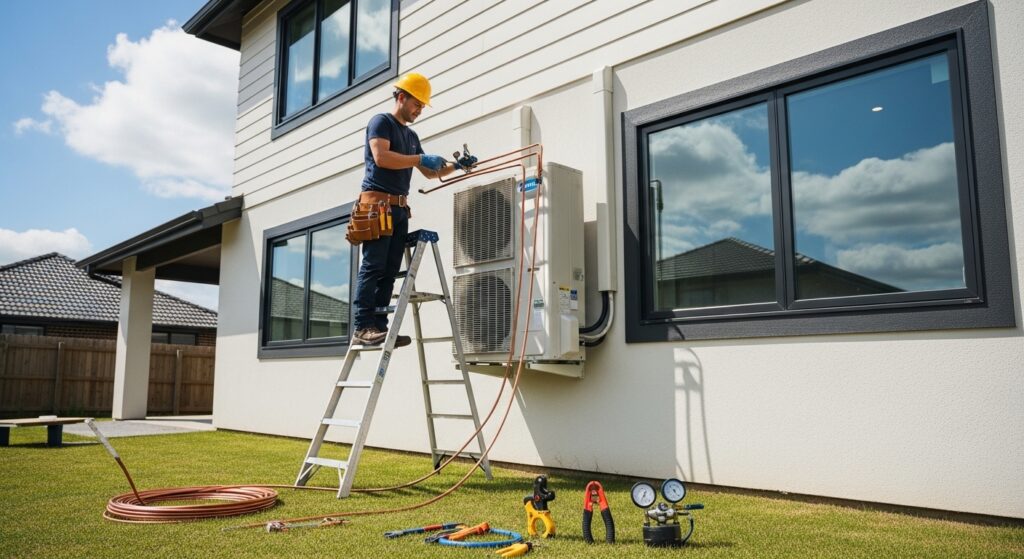
- Refrigerant lines: Route cleanly, braze with nitrogen purge, pressure test, evacuate to deep vacuum, and verify micron levels.
- Electrical connections: Terminate conductors cleanly, verify torque, label disconnects, and protect against weather.
- Duct sealing and insulation: Seal with mastic or approved tapes, insulate where required, and test for leakage.
- Condensate and drains: Confirm slope or pump function, trap and vent as needed, and test for leaks.
- Thermostat setup: Mount level, confirm control wiring, and program initial settings.
Commissioning and Verification
- Airflow: Measure static pressure and verify target cfm per ton or manufacturer specification.
- Refrigerant charge: Use manufacturer charts, superheat/subcooling as applicable, and confirm stable operation.
- Temperature split: Check supply and return delta to validate system health.
- Safety checks: Confirm fuse or breaker sizing, disconnect operation, and wire protection.
- Noise and vibration: Inspect line set supports, grommets, and isolation pads for quiet operation.
- Controls: Test thermostat modes, fan settings, and any zoning logic or damper operation.
- Final walkthrough: Review documentation, warranties, maintenance tasks, and filter schedules with the homeowner.
Skokie-Specific Considerations
Local codes and climate shape how systems should be designed and installed. In Skokie’s humid summers, attention to duct sealing, return sizing, and condensate routing pays off in comfort and reliability. Permits and inspections safeguard safety and quality; they also create a paper trail for future buyers. Outdoor unit placement should balance neighborhood aesthetics with service access and noise sensitivity, especially near property lines or bedrooms.
Enhancements That Elevate Comfort
- Improved filtration: High-MERV media filters catch more particulates while minimizing pressure drop when sized correctly.
- Humidity control: Variable-speed equipment and smart controls help manage moisture and feel cooler at the same set point.
- Zoning: Independent temperature control across floors or additions reduces runtime and targets comfort where it matters most.
- Envelope upgrades: Air sealing and insulation lower the cooling load and often deliver outsized comfort gains.
Quality Signals in a Proposal
- Written load calculations and duct findings
- Clear plan for line sets, drains, and electrical
- Commissioning checklist and static pressure targets
- Permitting responsibilities and inspection scheduling
- Model numbers and accessory details listed in full
Maintenance and Ownership
Schedule periodic filter changes, keep the outdoor coil free of debris, and have a professional verify refrigerant levels, electrical connections, and condensate function annually. Record thermostat settings and IAQ accessory maintenance intervals. Create a simple home log that captures dates, tasks, and any performance observations so small issues can be resolved before peak heat arrives.
Mid-Project Checkpoints
Partway through installation, review equipment labels, line set insulation, and drain routing. Confirm ducts are sealed before registers are installed and that thermostat wiring matches the design. Ask to see preliminary static pressure readings and ensure access panels are gasketed and secured. If changes arise—such as a different line route or thermostat model—get them documented before closing walls or finishing mechanical spaces. For more insight into how pros approach a top-tier result, study a trusted overview of air conditioning installation so you know which questions yield the most useful answers.
Frequently Asked Questions
Q: How do I know if my ducts can handle a new system? A: A static pressure test and visual inspection reveal leakage, restrictions, and return air needs. Corrections should be part of the installation scope.
Q: What is the most important step? A: Proper design and commissioning. Without both, even premium equipment cannot deliver consistent comfort or efficiency.
Q: Do I need permits in Skokie? A: Yes. Permits and inspections verify code compliance and protect safety and resale value.
Q: How soon after installation can I run the system? A: After commissioning and inspection approval, your system should be ready. Follow the installer’s guidance on initial operation.
Q: What documents should I receive? A: Load calculations, model and serial numbers, warranty information, permit records, and a completed commissioning checklist.
Ready to Use This Checklist for Your Skokie Home?
Start with load calculations, clear scope documentation, and a commissioning plan. Walk through each checkpoint and ask for readings, not just assurances. For a deeper understanding of the process from design through startup, review a detailed guide to air conditioning installation and partner with a qualified local professional to bring this checklist to life.