Introduction
This advanced guide dives into the methods professionals use to deliver quiet, efficient, and durable cooling in Illinois homes. If you are interested in the details behind design, commissioning, and optimization, you will find actionable insights to elevate performance well beyond a simple replacement. From static pressure diagnostics to data-driven refrigerant tuning, these practices help your next air conditioning installation excel in humid summers and shoulder seasons.
Because Illinois homes vary from vintage construction to high-performance builds, the strategies here emphasize testing and adjustment rather than assumptions. The result is a system that manages temperature and humidity effectively while protecting equipment life.
Advanced System Design
Design begins with an accurate load calculation and progresses to duct modeling and airflow targets for each room. Do not assume that existing ducts are adequate; measure them. Use blower-door results (if available) to refine infiltration inputs. Map out supply and return pathways, aiming for pressure balance that reduces door undercuts and uncontrolled air movement between rooms.
Airflow and Static Pressure
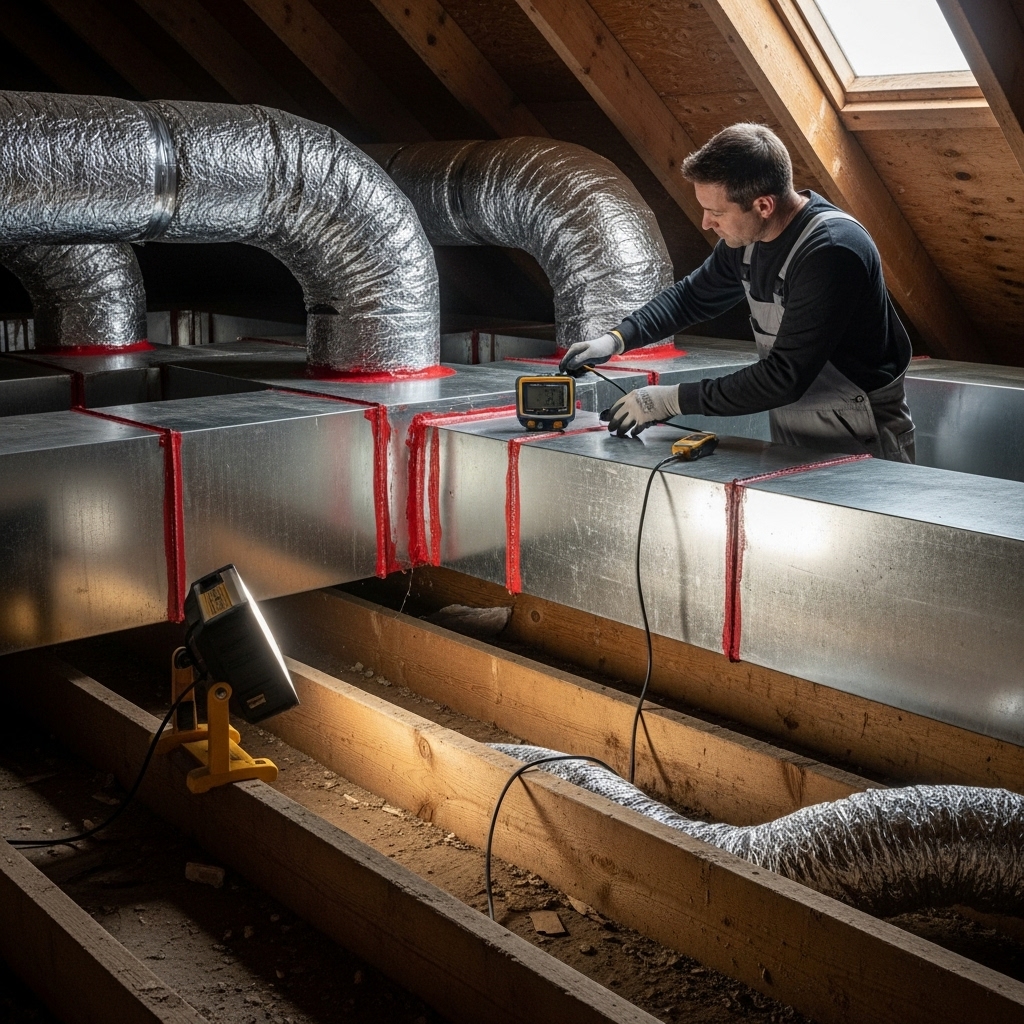
Total external static pressure (TESP) is a leading indicator of duct health and system performance. Measure TESP with a manometer at the indoor unit and compare to manufacturer limits. If readings are high, troubleshoot component by component: filter restriction, coil fouling, undersized returns, or restrictive grilles. Target quieter operation by selecting low-resistance filters and adequate return capacity. For variable systems, ensure blower configuration supports long, low-speed runs that improve dehumidification.
Duct Improvements That Matter
- Seal with mastic at all seams and joints; UL-181 tape is acceptable for select applications.
- Increase return capacity where pressure is high; consider dedicated returns for closed-door bedrooms.
- Smooth transitions into plenums and avoid abrupt area changes that create turbulence.
- Insulate ducts in attics or crawlspaces to limit heat gain.
Refrigerant Best Practices
Use nitrogen purge while brazing to prevent oxide scale inside the tubing. After assembly, pressure-test with dry nitrogen and verify no pressure drop. Pull a deep vacuum and verify with a micron gauge; confirm decay holds when the pump is isolated. Charge by weight using the manufacturer’s data plate, then verify with superheat and subcooling against target charts. For inverter systems, follow OEM-specific procedures that may require stabilized load conditions before finalizing charge.
Controls and Thermostat Strategy
Advanced comfort requires coordinated controls. Choose thermostats that support staging, humidity setpoints, and adaptive fan profiles. Configure fan delays to increase latent capacity without causing coil icing. For homes with variable occupancy, use schedules that favor longer cycles during peak humidity hours and setback strategies that avoid extreme temperature swings.
Noise and Vibration Management
Quiet systems result from proper mounting and airflow discipline. Use vibration-isolating pads under the condenser and ensure the line set is secured without transferring vibration into walls. Inside, avoid sharp turns and undersized registers that whistle. Select grilles with lower pressure drop and larger throw where appropriate. Commissioning should include a noise check in key rooms.
Electrical Quality and Protection
Confirm correct breaker sizing, a properly located outdoor disconnect, and solid grounding. Verify voltage at the condenser under load and ensure wire sizing supports current draw over the run length. For sensitive electronics in inverter systems, discuss surge protection and proper neutral/ground bonding to reduce nuisance failures.
Condensate Strategy
Install a trap where required, slope the drain correctly, and include a float switch to shut down the system if the pan fills. Provide cleanout access for maintenance. Where gravity drain is not practical, select a high-quality condensate pump and route discharge to an approved location.
Cold-Weather and Shoulder-Season Considerations
Even cooling-only systems benefit from planning for Illinois winters. Elevate or protect the condenser from roof runoff and snow accumulation. If using a heat pump, configure defrost controls and auxiliary heat staging for efficiency and comfort. Program thermostats to emphasize moisture control in spring and fall when dew points are high but temperatures are moderate.
Commissioning Checklist
- Record model/serial numbers and verify matched components.
- Measure TESP and adjust blower or ductwork to target values.
- Document supply/return temperatures and calculate temperature split.
- Verify charge by weight and confirm with superheat/subcooling readings.
- Test condensate safety switch and verify drain operation.
- Confirm thermostat staging, humidity control, and fan profiles.
- Check outdoor and indoor clearances for service access and airflow.
Mid-commissioning is the right moment to validate assumptions and adjust the plan. If static pressure remains high or humidity is not dropping as expected, revisit duct restrictions and blower setup. This is also the time to ask final questions about your air conditioning installation so you can document baseline readings for future maintenance.
Data-Driven Optimization
Use logged data where possible. Short-term monitoring of runtime, indoor humidity, and coil temperatures can reveal opportunities: slightly lower blower speeds for improved latent removal, or small charge adjustments within specifications to reach target subcooling. Always make one change at a time and re-measure to confirm improvement.
Maintenance for Peak Performance
Adopt a proactive maintenance plan: filter changes on schedule, annual coil cleaning, and electrical checks. Keep vegetation trimmed around the condenser and clear drainage paths. Document all service actions and readings; a history of data helps pinpoint emerging issues before they become breakdowns.
Advanced Troubleshooting Signals
- High TESP with normal charge: likely duct restriction or dirty filter/coil.
- Low temperature split with normal TESP: potential charge issue or metering device problem.
- Short cycling on hot days: oversized equipment or inadequate airflow.
- High indoor humidity with normal temperature: blower speed too high, staging misconfiguration, or leaky ducts.
FAQ
Q: How important is static pressure? A: It is central to airflow and comfort; keep it within the equipment’s limits for efficiency and quiet operation.
Q: Can variable-capacity systems fix duct problems? A: They help, but poor ductwork still limits performance; address restrictions and leakage.
Q: Do I need special tools for commissioning? A: Pros use manometers, micron gauges, and temperature/pressure probes to document performance correctly.
Q: Is charge by weight enough? A: It is the starting point; verify with superheat/subcooling under stable conditions.
Q: How often should data be logged? A: At installation and annually during maintenance, with extra checks if comfort issues arise.
Elevate Comfort in Your Illinois Home
When design, installation, and commissioning work together, the result is quiet, even cooling and dependable performance through humid summers. If you are ready to apply advanced methods and verify results with data, partner with specialists who can execute a top-tier air conditioning installation tailored to your home’s unique requirements.