When homeowners in Skokie, Illinois begin planning a central air upgrade, the word cost inevitably comes up. While exact figures vary widely, understanding the factors behind a project empowers you to set expectations, prioritize value, and make confident decisions. This guide explains the elements that shape central AC investment in Skokie—home characteristics, equipment choices, building codes, labor scope, and finishing details—so you can compare proposals on more than just a bottom line. If you are at the research stage and want to explore trusted installation insights, consider reading more about professional air conditioning installation to see how top-tier planning translates into long-term comfort and efficiency.
Why Skokie’s Climate and Housing Stock Matter
Skokie experiences hot, humid summers and cold winters, which places special demands on central air systems. The hot season’s temperature swings and moisture spikes mean your central AC must be sized correctly, balanced for even airflow, and paired with ventilation strategies that keep indoor humidity in check. Undersized systems can run constantly yet struggle to cool; oversized systems may short-cycle and fail to dehumidify properly. Both scenarios affect comfort and lifetime system performance.
Skokie’s neighborhoods include mid-century ranches, split-levels, brick bungalows, and newer infill homes. Construction type, insulation levels, and existing ductwork influence the project scope. A home that already has well-sealed, properly sized ducts presents a different path than a house with aging or poorly routed duct runs. Likewise, older electrical panels may need upgrades to meet current safety standards and the power requirements of a modern condenser and air handler.
Major Factors That Influence Overall Investment
While every home is unique, most central AC projects revolve around a core group of decisions. Evaluating these areas helps you understand proposals and spot meaningful differences between bids.
- Cooling load and system sizing: Manual J load calculations estimate how much cooling your home needs based on square footage, orientation, insulation, window type, and air leakage. Right-sizing avoids the pitfalls of over- or undersizing, which can add hidden costs over time via comfort issues and wear.
- Equipment efficiency and features: Higher seasonal efficiency ratings and variable-speed technologies can reduce energy consumption and improve temperature stability. Advanced features like communicating controls or staged compressors enhance comfort but may require compatible thermostats and control wiring.
- Ductwork condition and design: Sealing, insulating, resizing, or rerouting ducts changes the scope. Proper duct design aligns with Manual D standards and distributes air quietly and evenly to each room.
- Electrical readiness: A dedicated circuit, proper breaker size, and outdoor disconnect are typical requirements. Older homes might need panel upgrades or new wiring runs for safety and code compliance.
- Condensate management: Routing condensate safely to a drain or installing a condensate pump protects your home from moisture issues. In finished basements or tight mechanical spaces, planning condensate disposal is a key detail.
- Ventilation and indoor air quality: Pairing central AC with balanced ventilation or high-efficiency filtration can ease allergies and improve comfort. Media filters, UV lights, or ERV/HRV systems add scope but can provide distinct health and comfort benefits.
- Location and access: Tight side yards, roof placements, or hard-to-reach attics can affect labor planning, crane needs, and installation time. Accessibility also influences how easily equipment can be serviced later.
- Permits and inspections: Skokie requires mechanical and electrical compliance according to local codes. Proper permitting ensures safety, accountability, and future resale confidence.
- Thermostat and controls: Smart thermostats or zoning systems enhance control across multi-level homes. Controls must be compatible with your chosen equipment and existing wiring architecture.
How Design Choices Affect Long-Term Value
It is easy to focus only on initial outlay, but the most valuable central AC designs are balanced: they prioritize reliable comfort, measurable energy savings, and long equipment life. Variable-speed air handlers and compressors, when paired with a well-sealed duct system, can hold tighter temperature ranges, reduce hot and cold spots, and operate more quietly. Over time, these qualities support predictable utility bills and lower strain on the system.
Additionally, zoning can be a smart option for multi-story homes or additions. By controlling different areas independently, you reduce unnecessary runtime and tailor comfort to how your household uses each space. Zoning, however, is only effective when designed with correct damper sizing, bypass considerations, and a control strategy that communicates cleanly with the air handler and thermostat network.
Skokie Codes, Permits, and Inspections
Mechanical and electrical codes exist to keep your system safe, efficient, and durable. In Skokie, permits document that the installation follows local requirements and national standards. Expect licensed professionals to pull the necessary permits and schedule inspections upon completion. Inspectors typically review equipment placement clearances, refrigerant line handling, electrical connections, disconnects, and condensate management. Clear documentation and passed inspections protect homeowners and provide peace of mind at resale.
Home Envelope and Ducts: Hidden Drivers of Comfort
Even the best equipment cannot overcome a leaky envelope or poorly planned ducts. Air sealing and insulation improvements can significantly reduce the cooling load and help your AC operate more efficiently. Ducts should be inspected for air leakage, kinks, undersized trunks, or restricted returns. Sealed, insulated ducts balance air delivery and keep conditioned air from escaping into attics or crawl spaces. Pay special attention to return pathways, which are often undersized in older homes. Balanced returns help stabilize room pressures and improve air mixing.
Noise and Placement Considerations
Outdoor condensers have specific clearance requirements for airflow and service access. Placing the unit away from bedroom windows and community walkways can reduce perceived noise. Meanwhile, proper vibration isolation and line set routing can prevent rattles and hums inside. Indoors, locating the air handler in a conditioned or semi-conditioned space helps performance and reduces condensation risks. Discuss placement early to align functionality, aesthetics, and maintenance access.
What to Expect During Installation
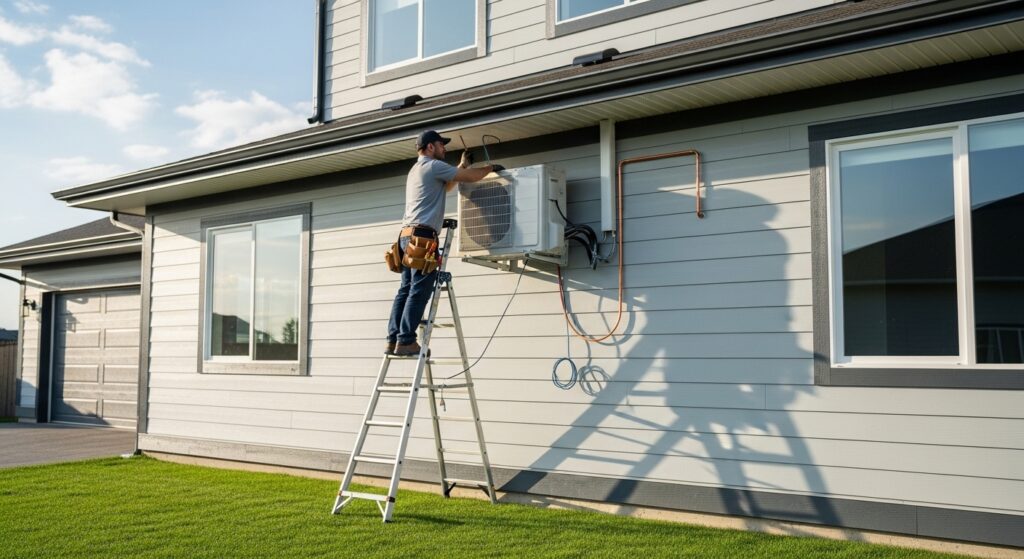
A typical central AC installation includes decommissioning any old unit, verifying refrigerant recovery protocols, preparing the pad or mounting location, running or replacing line sets, setting the condenser, installing or upgrading the air handler or coil, connecting high- and low-voltage wiring, configuring the thermostat, and testing. Duct sealing, static pressure testing, and balancing are critical steps that differentiate a quality job from a basic swap. Thorough commissioning verifies refrigerant charge, airflow, temperature split, and control logic so the system performs as designed.
Energy Efficiency and Comfort Enhancements
Beyond the equipment itself, consider enhancements that directly affect how the system feels day to day. Better filtration can reduce dust and allergens. Humidity control strategies can make summer temperatures feel more comfortable at the same thermostat set point. Insulated boots and properly sealed registers reduce whistling and deliver air more quietly. These details often cost less than major equipment upgrades yet dramatically change your lived experience.
Planning for Rebates and Incentives
Although specific programs change over time, many homeowners in the Chicago area benefit from manufacturer promotions or utility rebates for high-efficiency equipment and advanced controls. Document your chosen model numbers, SEER2 and EER2 ratings, and thermostat compatibility to streamline any application. Keep copies of permits, load calculations, and commissioning reports since these can support incentive submissions and future warranty questions.
Comparing Proposals the Smart Way
When you receive multiple proposals, go beyond the model number. Ask how each bid approached load calculations, ductwork evaluation, electrical readiness, and commissioning. Clarify whether line sets will be replaced or pressure tested and flushed. Request details on thermostat integration and any zoning plan. Finally, look for clear notes on permits, inspections, and startup documentation. A thorough scope that addresses these points reduces surprises and supports a smoother, more comfortable result.
Common Pitfalls to Avoid
- Skipping a formal load calculation and sizing by rule of thumb
- Installing high-efficiency equipment on leaky or undersized ducts
- Ignoring return air design in older homes
- Overlooking electrical panel capacity or disconnect requirements
- Underestimating condensate routing in finished spaces
- Skipping commissioning and air balancing
- Placing condensers without considering noise and airflow clearances
Mid-Project Insights to Keep Your Plan on Track
As work proceeds, confirm that materials match the scope, that lines are properly insulated, and that any duct changes follow the agreed design. Ask your installer to review static pressure readings and thermostat setup with you. If you are exploring options or upgrades during construction, this is often the best time to discuss adjustments. For a deeper understanding of the planning and craftsmanship that produce reliable comfort, you can also review professional guidance on air conditioning installation so you know which questions to ask before the system is sealed up.
Frequently Asked Questions
Q: How do I know what size central air system my Skokie home needs? A: A contractor should perform a Manual J load calculation that accounts for insulation, windows, orientation, and air leakage. This reveals the correct capacity and drives duct and equipment choices.
Q: Do I need new ducts, or can I reuse what I have? A: Many homes can reuse existing ducts, but sealing, insulating, resizing, or adding returns may be necessary. A duct evaluation and static pressure test will guide the decision.
Q: What is commissioning, and why is it important? A: Commissioning verifies refrigerant charge, airflow, temperature split, and control logic. It ensures the system operates as designed for comfort, efficiency, and reliability.
Q: Are permits required in Skokie? A: Yes. Proper permits and inspections protect safety, validate code compliance, and support future resale. Your installer should handle the permitting process.
Q: How can I lower energy consumption without changing equipment size? A: Improve your home’s envelope, seal ducts, use a smart thermostat appropriately, and ensure ventilation and filtration strategies support efficient operation.
Q: Will a more efficient system always be the right choice? A: Efficiency matters, but it must pair with proper sizing, duct design, and commissioning. A balanced system delivers better overall value than equipment efficiency alone.
Q: How loud will the outdoor unit be? A: Modern condensers are quieter than older models, but placement and vibration isolation still matter. Discuss location, pad design, and clearances early.
Q: What documents should I keep after installation? A: Keep model and serial numbers, permits, load calculations, commissioning reports, and warranty information for future service and any incentive applications.
Schedule Your Central Air Project in Skokie
Ready to turn research into a comfortable, reliable home? Connect with a qualified local professional, ask for a proper load calculation, and request a scope that includes duct evaluation and commissioning. For a clear picture of what excellence looks like from planning through startup, explore this guide to air conditioning installation and take the next step toward a cooler, quieter, and more efficient home.