Getting central cooling right in Skokie, Illinois requires a blend of planning, technical knowledge, and attention to local climate realities. Summers can be humid and hot, while shoulder seasons bring rapid temperature swings that challenge comfort and efficiency. This comprehensive guide walks Skokie homeowners through site evaluation, equipment selection, ductwork considerations, permitting, and what to expect on installation day and beyond. Whether you are upgrading from a window unit, replacing an aging system, or adding cooling to a previously unconditioned home, understanding the fundamentals of air conditioning installation will help you make confident decisions and enjoy years of dependable comfort.
Because every home is unique, the ideal solution balances the layout of your rooms, insulation levels, existing electrical and duct infrastructure, and your efficiency goals. The guidance below is designed to be practical for a wide range of single-family residences in Skokie—brick bungalows, split-levels, ranches, and two-story homes included. You will learn what professionals look for, which choices matter most, and how to prepare your home so the installation proceeds smoothly and safely.
Use this as a roadmap from the earliest planning conversations through the final system walkthrough. You will find steps for verifying load calculations, choosing indoor and outdoor unit locations, ensuring proper condensation management, and optimizing airflow. By addressing each item thoughtfully, you can avoid common pitfalls, protect your investment, and achieve reliable, even cooling throughout your home.
Understand Skokie’s Climate and Your Cooling Load
Skokie’s summer climate places steady demands on cooling equipment. High humidity amplifies the perception of heat, which means your system must remove both sensible heat (temperature) and latent heat (moisture). The starting point for any successful installation is a professional load calculation. Rather than relying on rough rules of thumb, an accurate calculation considers square footage, ceiling heights, window orientation, insulation values, air leakage, and occupant behavior.
A thorough load assessment ensures the system is neither undersized nor oversized. An undersized unit runs constantly and struggles on peak days, while an oversized unit short-cycles, reducing moisture removal and comfort. Right-sizing helps achieve steady, efficient operation, stable indoor humidity, and longer equipment life.
Choosing the Right System Type
Skokie homes typically adopt one of three approaches: conventional split systems with a furnace and evaporator coil, heat pump systems that provide both heating and cooling, or ductless mini-split systems for homes without existing ductwork. Conventional split systems pair well with existing forced-air furnaces and are common in retrofits. Heat pumps have become increasingly viable in our region thanks to improved cold-climate performance and can partner with gas furnaces in a dual-fuel setup. Ductless systems excel in additions, finished attics, or homes where installing ducts is intrusive.
Think about your goals: Do you want maximum efficiency, lowest maintenance, quiet operation, or zoned control? Each system type carries different tradeoffs in initial complexity, filter maintenance, and long-term flexibility. For example, a multi-zone ductless solution can fine-tune temperatures across spaces with different loads, like a sunroom versus a shaded bedroom.
Permits, Codes, and Homeowner Association Considerations
Local codes guide safe, durable installations. In Skokie, expect permitting and inspection requirements that cover electrical work, line set routing, refrigerant handling, and outdoor unit placement. Permits protect you by ensuring qualified workmanship and adherence to safety standards. If you live in a neighborhood with a homeowners association or have zoning constraints, verify placement rules for condensers, setbacks, and screening.
Proper permitting also facilitates smooth property transactions later. Buyers and their inspectors often request documentation confirming that mechanical upgrades were installed to code. Keep all final inspection certificates and equipment documentation organized for future reference.
Site Evaluation: Indoor and Outdoor Placement
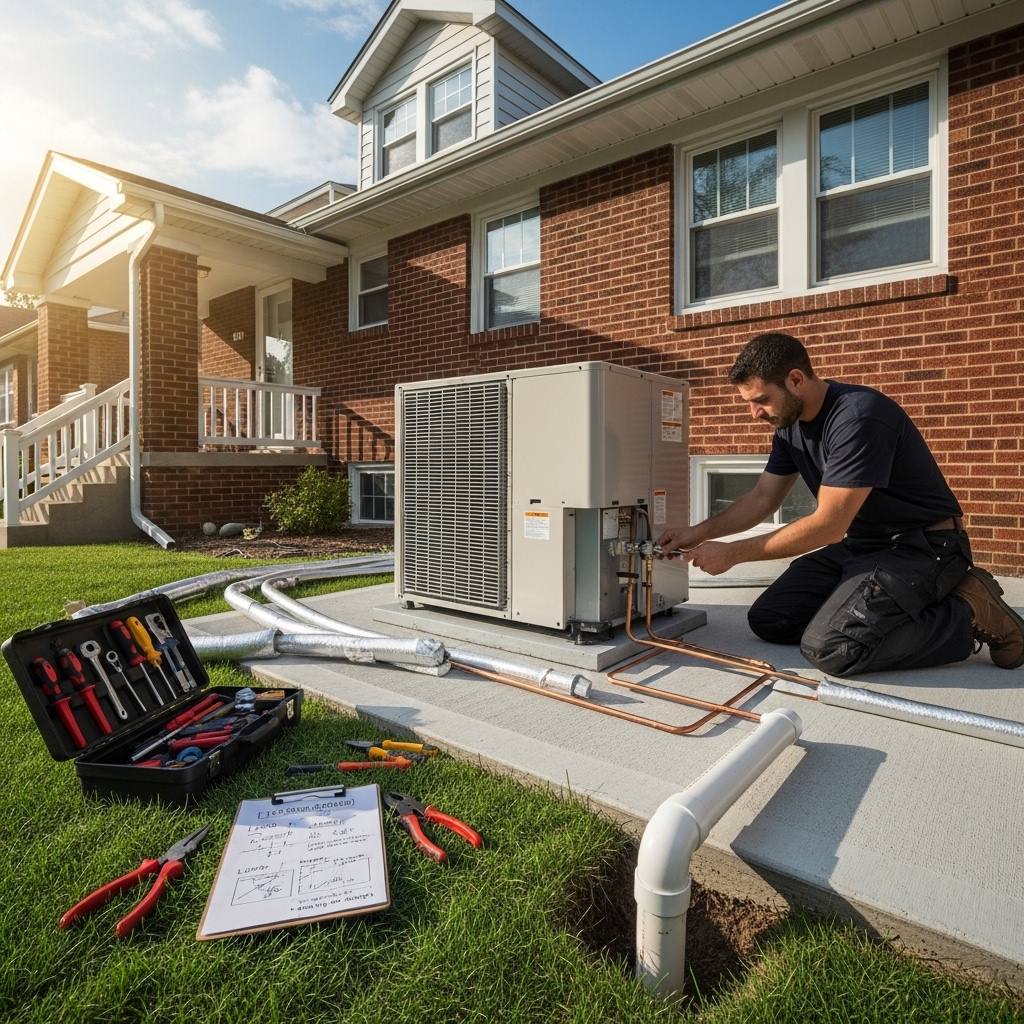
Location matters. The outdoor condenser should sit on a level, stable pad to minimize vibration and discourage frost heave during cold weather. A spot with adequate clearance promotes strong airflow and easier service access. Avoid placing the unit directly under roof driplines or near bedrooms where noise sensitivity is high. Bushes and fencing should allow the manufacturer’s recommended clearance around the unit to prevent recirculation of hot exhaust air.
Indoors, the air handler or evaporator coil must be accessible for filter changes, coil cleaning, and future repairs. Plan for a condensate drain that routes reliably to a proper termination point, with traps and safety float switches where recommended. In homes with finished basements, consider service clearances and condensate pump needs.
Ductwork: The Unsung Hero of Comfort
Even premium equipment underperforms when ductwork is undersized, leaky, or poorly balanced. Before installation day, a contractor should assess the supply and return ducts for capacity and layout. In older Skokie homes, returns are sometimes undersized, which can restrict airflow and make equipment run louder and harder. The solution may involve adding returns, resizing trunks, or improving transitions to reduce turbulence.
Sealing and insulating ducts in unconditioned spaces boosts efficiency and comfort, especially in attics and crawl spaces. Pay special attention to rooms that are historically hard to cool. Strategic balancing dampers and registers can make a substantial difference in even temperature distribution.
Electrical and Refrigerant Line Considerations
Modern systems often draw more starting current and require dedicated circuits with appropriately sized breakers and disconnects. An installation should include verification of panel capacity, wire sizing, and grounding. Outdoors, a weatherproof disconnect within sight of the condenser is standard. Indoors, the air handler or furnace controls, thermostat wiring, and low-voltage connections should be neatly organized and labeled.
Refrigerant lines must be properly sized, well-insulated, and routed with attention to aesthetics and serviceability. Avoid excessive line length or sharp bends that increase pressure drop. Proper evacuation, charging, and leak testing ensure long-term reliability and efficiency.
Ventilation and Indoor Air Quality
Cooling installations are excellent opportunities to improve filtration and ventilation. High-MERV filters capture finer particles but also increase resistance; the system must be capable of handling the added pressure. Consider whole-home dehumidification if humidity regularly climbs in summer, or energy recovery ventilation to support fresh air without excessive energy penalty. Thoughtful IAQ enhancements can make your home feel cooler at the same temperature setpoint.
Noise, Vibration, and Comfort
Quiet systems start with smart placement and vibration control. Anti-vibration pads under the condenser, flexible line set connections, and secure mounting all contribute to quieter operation. Indoors, sturdy duct supports, lined plenums where appropriate, and a properly matched blower reduce noise in living areas. If bedrooms are sensitive areas, prioritize return placement and duct lining strategies to minimize sound transmission.
Choosing Thermostats and Controls
Smart thermostats and zoning controls can elevate comfort and efficiency. In multi-story homes common around Skokie, temperature stratification often makes upstairs bedrooms warmer in summer. Zoning or dedicated dampers can direct cooling to the spaces that need it most. Verify compatibility between your planned thermostat and the system’s staging, variable-speed capabilities, and dehumidification modes.
Water Management: Condensate Drains and Protection
Air conditioners remove moisture, which must be safely drained. A properly trapped condensate line with a cleanout port and a float switch in the secondary drain pan can protect finished spaces. In basements where gravity drainage is not possible, a reliable condensate pump with a serviceable check valve is essential. Maintenance access and a straightforward path for cleaning help prevent algae buildup and clogs.
What to Expect on Installation Day
Professional crews typically start by protecting floors and work areas, then decommission and remove old equipment if applicable. New equipment placement, duct modifications, electrical work, and refrigerant line connections proceed in a logical sequence. The team will evacuate and charge the system, verify superheat and subcooling, check static pressure and airflow, and calibrate controls. A thorough startup process identifies issues before they become headaches.
Expect a final walkthrough to demonstrate filter replacement, thermostat operation, recommended maintenance intervals, and what to look for in the first weeks of operation. Clear labeling on disconnects, breakers, and service panels supports safe future service.
Energy Efficiency Best Practices
Efficiency involves both equipment and installation quality. Variable-speed blowers, multi-stage or inverter-driven compressors, and matched indoor/outdoor components allow the system to modulate output to the load. Quality installation practices—such as precise refrigerant charge, duct sealing, and balanced airflow—often yield bigger real-world savings than nominal efficiency ratings alone.
Set your thermostat thoughtfully. A modest setback when you are away can reduce run time without sacrificing comfort. Ceiling fans can improve perceived comfort, allowing a slightly higher setpoint while maintaining the same satisfaction level.
Skokie-Specific Considerations
Homes in the area often have mature trees and dense neighborhoods. Plan condenser placement with neighbors in mind, considering noise and appearance. For older masonry homes, evaluate wall penetrations for line sets carefully to preserve the building envelope and manage moisture. Where basements are semi-finished, equipment clearance and combustion air (for furnace pairings) require special attention.
Mid-Project Checkpoints
Before closing walls or finalizing aesthetic details, verify key milestones: duct modifications complete and sealed, line sets pressure-tested, condensate routing confirmed, and electrical work inspected where required. This is also a good time to confirm thermostat location—ideally away from direct sunlight, supply registers, and heat-generating appliances.
In the midst of planning and execution, revisit your initial goals. If quiet operation, zoning, or humidity control were priorities, confirm those features are on track. If you need a refresher on how pros approach system design, explore resources that explain the steps of professional air conditioning installation so you stay aligned with best practices and outcomes.
Maintenance Planning from Day One
Protect your investment with a clear maintenance routine. Replace or clean filters regularly, keep the outdoor coil free of debris, and maintain clearances around the condenser. Seasonally, inspect the condensate line, test safety switches, and listen for unusual vibration or noise. Scheduling professional tune-ups helps verify refrigerant levels, blower speeds, and electrical health.
Good maintenance not only preserves efficiency but also catches small issues early—worn contactors, weak capacitors, or partially clogged drains—before they disrupt comfort on the hottest day of the year.
Troubleshooting Early Comfort Issues
After a new installation, a few adjustments are common. If certain rooms feel warmer, a balancing tweak or additional return may help. If humidity feels high, review thermostat dehumidification settings or blower speed. If the system seems louder than expected, revisit vibration isolation, duct lining, and airflow paths. Warranty-support teams can address these items quickly when identified early.
Frequently Asked Questions
Q: How long does a typical installation take in a Skokie single-family home? A: Many single-system replacements are completed within a day, while projects involving significant duct changes or new line-set routing can take two or more days. Permitting and scheduling inspections may extend the overall timeline, though the actual on-site work is usually focused and efficient.
Q: Will new ducts be required? A: Not always. If your existing ducts are sized correctly, sealed, and in good condition, they can often be reused with minor adjustments. However, older systems may benefit from added returns, improved transitions, or sealing and insulation to meet modern airflow and efficiency standards.
Q: Where should I place the outdoor unit? A: Choose a level, well-drained location with manufacturer-recommended clearances. Avoid tight alcoves, heavy roof runoff, and areas sensitive to noise. Think about maintenance access and snow accumulation patterns in winter.
Q: What thermostat should I choose? A: Pick a control that matches your system’s staging or variable-speed capabilities and supports features you value, like dehumidification or zoning. Proper placement away from drafts and sunlight is equally important for accurate readings.
Q: How can I keep indoor humidity comfortable? A: Correct sizing, longer run times with multi-stage or variable systems, and appropriate blower speeds help remove moisture. In particularly humid conditions, whole-home dehumidifiers can complement cooling.
Q: What should I do if a room remains warm after installation? A: Request a review of duct balancing, check for supply register obstructions, and verify return pathways. Airflow adjustments or duct enhancements often solve room-to-room variations.
Q: Do I need a permit for replacement systems? A: In most cases, yes. Permits ensure compliance with electrical, mechanical, and safety codes, and they provide documentation that benefits you during future home sales or refinances.
Preparing Your Home Before the Crew Arrives
Clear access pathways to the mechanical area, attic, or crawl spaces. Move vehicles if the driveway will be used for equipment staging. Secure pets and protect sensitive belongings in work zones. If duct modifications are planned, consider temporarily relocating items stored near trunks and returns to allow free movement of personnel and materials.
Review your preferred thermostat programming in advance and plan for initial setpoints. If you have special requirements—like maintaining a studio’s humidity or protecting musical instruments—share them with the crew lead so airflow and dehumidification choices can reflect your priorities.
After the Installation: Fine-Tuning and Living with Your System
In the first few weeks, observe comfort, noise, and humidity trends. Note how the system behaves on mild days versus peak heat. If something seems off—short-cycling, temperature swings, or unusual sounds—document the conditions and contact your installer for adjustments. Small tweaks to blower speed, refrigerant charge, or duct balancing can make a noticeable difference in comfort.
Keep filters and outdoor coils clean, maintain condensate components, and schedule seasonal tune-ups. With steady care and smart operation, your system will deliver quiet, efficient comfort through many Skokie summers.
Schedule Your Installation in Skokie
Ready to enjoy steady, even cooling and a quieter home? Take the next step and plan your professional air conditioning installation with a team that understands Skokie’s climate, housing styles, and code requirements. When you combine right-sized equipment with quality ductwork, precise charging, and thoughtful placement, you will feel the difference every day of the season.