If you’ve booked an AC tune-up and wonder what will happen during the visit, you’re not alone. Knowing what to expect demystifies the process and helps you get the most from your appointment. In Skokie, Illinois, where humid summers and sudden heat waves test cooling systems, thorough maintenance is the key to reliable comfort. Understanding each step gives you confidence that your equipment is ready for whatever the season brings.
Whether this is your first professional service or your annual check, start by choosing a provider that follows a methodical checklist and explains findings clearly. For a reliable baseline, schedule professional air conditioning maintenance that includes cleaning, testing, and a written report. With clear expectations, you can prepare your home, ask smart questions, and prioritize any follow-up items.
Before the Technician Arrives
A little preparation helps the visit go smoothly and ensures the technician can access everything they need.
- Clear the path: Move items away from the air handler, mechanical closet, and outdoor unit.
- Replace the filter if it’s overdue: A fresh filter provides a clean baseline for airflow measurements.
- List symptoms: Note uneven cooling, humidity concerns, odors, noises, or icing you’ve seen.
- Thermostat access: Make sure the technician can adjust settings and review schedules.
Typical Sequence of a Professional Maintenance Visit
While every contractor has a process, most thorough visits follow a similar flow focused on safety, cleaning, testing, and performance verification.
- Safety and power checks: Confirm correct breaker status, secure panels, and safe work area.
- Thermostat and control verification: Ensure accurate temperature readings and proper mode settings.
- Airflow baseline: Inspect the filter and, when accessible, measure static pressure or blower performance.
- Indoor coil and drain inspection: Evaluate cleanliness and clear the condensate line; verify pump or float switch operation if present.
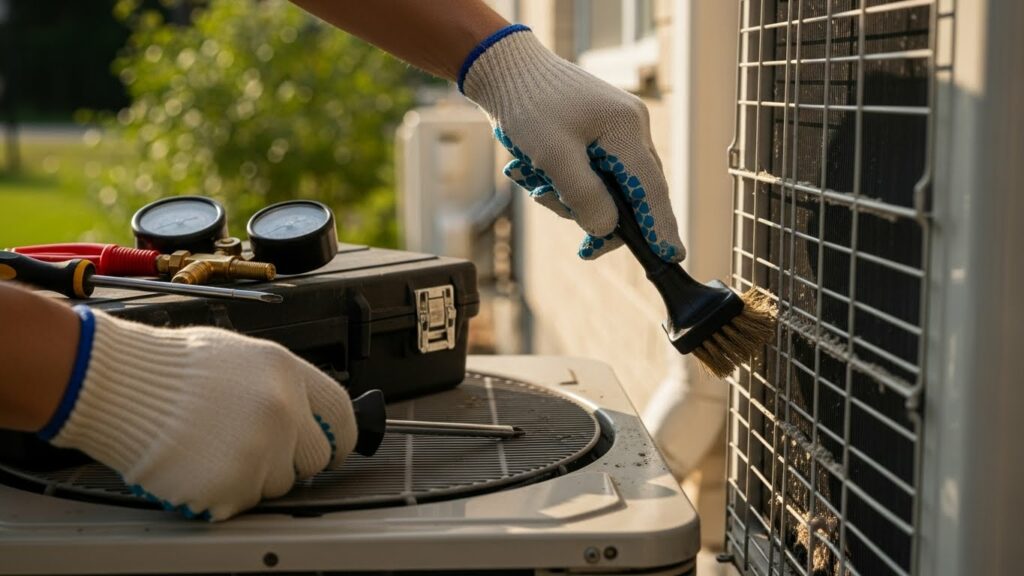
- Outdoor unit cleaning: Rinse condenser coils, check fan blade condition, and verify cabinet stability and level.
- Electrical evaluation: Test capacitors, contactor condition, wiring connections, and safety controls.
- Refrigerant assessment: Use temperature and pressure relationships to evaluate charge and system health.
- Performance test: Measure temperature split, observe cycle behavior, and check dehumidification performance.
Inside the Home: Air Handler and Evaporator Coil
The indoor side of your system is where heat and moisture are removed from the air. Keeping this area clean and draining properly is central to both comfort and system protection.
- Filter condition: Confirm correct size and MERV rating for your system and home needs.
- Blower inspection: Check for dust accumulation, balance issues, and signs of motor wear.
- Coil visibility: Many coils are within sealed cabinets; where accessible, the technician inspects for dirt, icing, and leaks and cleans as appropriate.
- Condensate management: Clear the drain line, clean the pan, and test pumps or safety switches to prevent water damage and musty odors.
Outside the Home: Condenser and Surroundings
Summer in Skokie means lawn care, storms, and pollen can all impact outdoor airflow. The technician restores and protects that airflow with careful attention to the condenser.
- Coil rinse: A gentle spray removes dirt and grass clippings without bending delicate fins.
- Fin straightening: Where safe, minor fin repairs help recover airflow lost to bent sections.
- Cabinet and pad: Confirm the unit is level and secure to minimize vibration and stress on refrigerant lines.
- Clearance and vegetation: Ensure at least two feet of space around the unit and remove debris that restricts air.
Electrical and Refrigerant Checks
Electrical health and refrigerant balance are at the heart of reliable performance. Early detection of wear or imbalance avoids mid-season trouble.
- Capacitors and contactors: Testing confirms they operate within specifications; worn parts can cause hard starts, buzzing, or intermittent shutdowns.
- Wiring and connections: Tightening and visual inspection help prevent heat buildup or arcing.
- Refrigerant evaluation: Using pressures and temperatures, the technician assesses the charge; they also look for signs of restrictions or leaks.
System Performance and Comfort Verification
Beyond the components, the visit confirms that your home actually feels better when the system runs. Expect the technician to measure temperature split and observe how the system cycles and dehumidifies. If humidity remains high, they’ll check fan settings, drain performance, and coil condition and may recommend adjustments.
During this stage, many homeowners choose to discuss comfort goals, schedules, and any persistent hot or cold spots. It’s also an ideal time to ask how small changes—like register adjustments or improved filtration—might enhance comfort without major modifications. If you want to benchmark long-term performance, a mid-season follow-up or a data-logging thermostat can help track trends.
How Long a Visit Typically Takes
Time varies with accessibility, system condition, and whether deep cleaning is needed. Expect a thorough tune-up to cover safety, cleaning, and detailed testing without rushing. If the technician discovers heavy coil contamination or duct restrictions, they may recommend scheduling a dedicated cleaning or diagnostic visit to address those items thoroughly.
The Report: Turning Measurements into Action
A clear, written report is one of the most valuable outcomes of maintenance. Look for notes on coil cleanliness, temperature split, refrigerant evaluation, electrical test results, and any recommended follow-ups. Use this document to plan future upkeep, track filter cadence, and confirm that next season’s visit remains preventive rather than reactive.
What Technicians Often Recommend After Maintenance
Not every visit ends with a to-do list, but it’s common to see a few targeted recommendations that protect performance and comfort.
- Filter strategy: Adjusting MERV rating or change frequency to match pets, allergies, and local pollen.
- Drain care: Simple homeowner steps to keep the line clear between seasons.
- Airflow tweaks: Register adjustments or duct balancing to correct hot spots.
- Thermostat settings: Scheduling tips that improve comfort and reduce unnecessary runtime.
Skokie-Specific Advice You May Hear
Technicians who work locally understand how storms, lawn care, and pollen bursts affect systems. You might hear suggestions to rinse outdoor coils after mowing, check filters more often in May and June, and keep shrubs trimmed back from the condenser to maintain airflow when summer humidity peaks.
If Repairs Are Suggested
Maintenance sometimes uncovers components that are wearing or out of spec. A good technician will explain the symptom, the risk of delaying, and the impact on comfort and efficiency. If the repair isn’t urgent, you can plan it for a convenient time. If it affects reliability during a heat wave, you’ll have the facts to make a timely decision.
Frequently Asked Questions
Q: Do I need maintenance every year?
A: Most Skokie homes benefit from annual professional service, with homeowner checks in between, especially during high-pollen and peak-heat periods.
Q: Will maintenance fix humidity problems?
A: It often helps by restoring coil cleanliness, verifying drain performance, and optimizing fan settings. Persistent humidity issues may warrant additional solutions.
Q: How should I prepare for the visit?
A: Clear access to equipment, replace overdue filters, and jot down recent symptoms or changes in comfort.
Q: What if my system seems to run fine?
A: Maintenance documents baseline health, supports efficiency, and catches issues before they pause your comfort during a heat wave.
Q: Can I be present during testing?
A: Absolutely. Many homeowners appreciate hearing real-time observations and learning how small habits can improve performance.
Be Ready for Skokie’s Next Heat Wave
When you know what a thorough tune-up includes, you can book with confidence, prepare your home, and use the visit to fine-tune comfort for your family. To establish a strong baseline and keep your AC humming all summer, schedule professional air conditioning maintenance and use the report to guide simple steps between visits. With consistent care, your system will be ready for every humid, stormy, and sun-soaked day ahead.


