Introduction
Spring in Skokie, Illinois brings thawing snow, rising humidity, and the perfect window to prepare your cooling system for summer. A thoughtful maintenance routine in spring prevents surprise breakdowns, supports healthy indoor air, and preserves efficiency when temperatures climb. This guide walks you through a thorough spring startup procedure, from thermostat programming to coil cleaning and drainage checks. When you address small issues before hot weather arrives, you reduce strain on components and extend the life of your air conditioner.
Spring is also the ideal time to plan ahead. As you work through this guide, decide which tasks you will complete yourself and which are better for a professional technician. Homeowners can safely handle cleaning and simple inspections, while electrical diagnostics and sealed-system work belong in expert hands. If you prefer a pro to complete a full spring tune-up, book air conditioning maintenance early to secure a convenient appointment before summer demand peaks.
Set Up the Thermostat for the Season
Begin by updating your thermostat’s date and time, confirming mode settings, and programming schedules. Plan comfortable set-points for mornings and evenings, with modest adjustments during work hours or overnight if that suits your household. If your thermostat supports geofencing or learning algorithms, re-train them as your spring routines evolve. Run a short cooling cycle to ensure the system responds, and verify the fan settings. These small steps ensure coordinated operation between the thermostat, blower, and outdoor condenser.
Replace or Upgrade Your Air Filter
After a winter of heating, filters often carry dust, pet dander, and construction debris from indoor projects. Replace the filter with a manufacturer-approved size and rating, ensuring airflow arrows point toward the air handler. A clean filter supports evaporator coil performance, prevents icing, and provides better indoor air quality. If allergies worsen in spring, consider a higher-efficiency filter compatible with your system, balancing filtration with healthy airflow.
Outdoor Unit Inspection and Cleaning
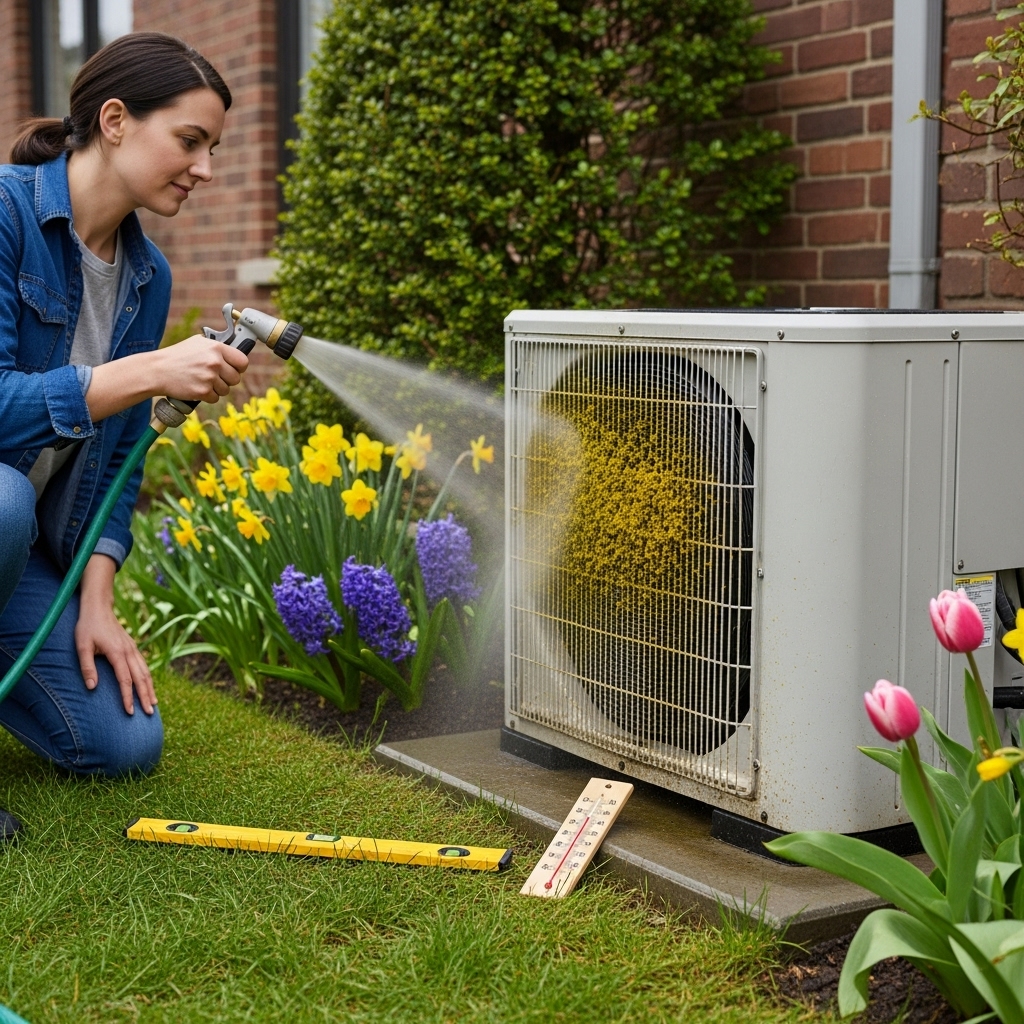
Clear winter debris around the condenser, including leaves, twigs, and windblown litter. Ensure at least two feet of clearance in all directions, then gently hose the coil to remove dust and pollen. Confirm that the unit sits level and stable. Inspect fan blades for damage and listen for smooth motor operation when the system starts. If the protective coil guard is bent, straighten it carefully to maintain airflow. Keeping the outdoor unit clean in spring cuts energy use during hot spells later.
Indoor Coil Area and Drainage
Inspect the evaporator coil cabinet exterior and the condensate pan below it. Dust the cabinet to discourage debris infiltration, and flush the condensate drain with warm water to confirm flow. If your system has a float switch, test it gently to ensure it turns the system off when water level rises, preventing damage. Spring is the time to clear biofilm or residue that might have formed during the heating season when the drain was idle. A clean, free-flowing drain prevents mid-summer surprises.
Check Insulation and the Refrigerant Line Set
Examine the large suction line’s insulation from the condenser to the house. Replace cracked or missing foam to prevent condensation and energy loss. Confirm the line set is secured and not rubbing against hard surfaces. While refrigerant diagnostics should be left to professionals, you can note any oily residue or vibration that might suggest a problem. Reporting these observations early helps a technician resolve issues before peak season stresses the system.
Verify Airflow at Supplies and Returns
Open all supply registers, clean visible dust, and clear furniture and curtains from airflow paths. Ensure return grilles are unobstructed and the filter rack seals tightly. Walk through the home during a short test cycle and compare airflow room to room. If a space feels notably weaker, note it for a ductwork evaluation. Balanced airflow supports even cooling and protects the evaporator coil from icing in humid summer conditions.
Seal and Weatherize the Home
Mechanical maintenance pairs well with basic weatherization. Spring is a great time to add weatherstripping, seal gaps around windows and doors, and inspect attic insulation. These improvements reduce heat gain, cut runtime, and enhance comfort. They are particularly helpful in rooms that struggle to maintain temperature during July heat waves. By reducing the home’s cooling load, you make every maintenance task more effective.
Run a Performance Check
With the system clean and airflow paths open, run a 15- to 20-minute cooling cycle. Use a simple thermometer to gauge the temperature difference between the main return and a nearby supply. You should feel a clear drop at the supply. Listen for steady fan operation, smooth compressor starts, and a consistent hum from the outdoor unit. Observe the condensate drain to ensure water flows. Record your observations as a baseline for comparison later in the season.
Common Spring Fixes to Prevent Summer Failures
Many summer breakdowns have springtime solutions. Dirty filters restrict airflow and increase icing risks; replace them now. Clogged drains cause water damage during humid spells; clearing them today prevents midseason leaks. Bent or blocked condenser fins reduce heat rejection; a careful rinse restores performance. Loose blower panels and leaky duct joints draw unfiltered air and lower efficiency; reseating and sealing prevent dust and imbalance. Treat these items early for a smoother summer.
Indoor Air Quality Considerations
Spring pollen and dust can aggravate allergies. Keep entry mats clean, vacuum frequently with a HEPA-equipped vacuum, and wipe registers and grilles. Consider incremental filter upgrades as long as static pressure remains healthy. If humidity tends to rise in late spring, ensure the AC’s dehumidification performance is strong by keeping the coil and drain clean and by running reasonable fan speeds. Comfortable humidity promotes better sleep and discourages microbial growth.
Warranty and Service Records
Review your equipment warranty terms and note maintenance requirements. Keep receipts and a simple log of filter changes, coil cleaning, and professional visits. Accurate records protect coverage and help technicians diagnose quickly. Spring is also a good time to label key components—disconnects, panels, and drain cleanouts—so future maintenance is faster and safer. A little organization now saves time during urgent situations later.
Mid-Guide Reminder
If you encounter odd noises, uneven cooling, or musty odors during your spring check, do not wait for the first heat wave. Early attention prevents stress on motors and compressors and preserves efficiency. When needed, book professional air conditioning maintenance and share your notes so the technician can focus on likely causes. A collaborative approach leads to faster, more accurate fixes.
Frequently Asked Questions
Q: Why is spring the best time for AC maintenance? A: Mild weather allows you to test and clean thoroughly without the pressure of peak heat. Technicians also have greater appointment availability before summer demand surges.
Q: How often should I replace my filter? A: Check monthly in spring and summer and replace at least every one to three months, sooner in homes with pets or allergies.
Q: Should I cover my outdoor unit in winter? A: A breathable top cover that prevents debris falling directly into the fan is acceptable, but avoid full wraps that trap moisture. Always remove any cover before spring startup.
Q: What thermostat settings save energy in spring? A: Use the highest comfortable set-point and take advantage of cool evenings by ventilating when outdoor conditions allow, then close windows before running the AC.
Q: Can closing vents help cool other rooms faster? A: Usually not. It increases static pressure and can reduce overall system performance. Address airflow with balancing or duct improvements instead.
Q: How do I know my condensate drain is clear? A: During a cooling cycle, observe a steady drip at the termination and ensure no water collects in the pan. If in doubt, flush the line with warm water.
Q: Is coil cleaning safe for homeowners? A: Light rinsing of the outdoor coil is safe. The indoor coil often requires professional access and cleaning solutions to avoid damage.
Q: What if I smell musty odors at startup? A: Check the filter, drain, and coil area for debris. Persistent odors may indicate microbial growth or duct issues that warrant professional evaluation.
Q: How long should a spring check take? A: A thorough homeowner check can take one to two hours depending on access and cleanliness. Professional service includes additional tests and may take longer.
Q: What are signs I need a professional right away? A: Tripped breakers, ice on refrigerant lines, short cycling, or warm air from supplies merit immediate attention.
Plan Ahead for a Smooth Summer
With your spring checklist complete, you have set your system up for comfort and reliability. Keep a simple log of what you did, when you replaced the filter, and any observations about airflow or noise. If you want added assurance before summer, schedule expert air conditioning maintenance to fine-tune performance, verify critical measurements, and confirm your home is ready for heat and humidity. A proactive spring routine pays dividends all season long in comfort, efficiency, and peace of mind.


