Determining the right maintenance schedule for your AC in Skokie, Illinois isn’t a one-size-fits-all decision. Our summers can swing from warm and breezy to hot, humid, and stormy in the span of a week, and that variability affects how hard your system works. The ideal cadence balances prevention, comfort, and efficiency so your equipment thrives through the stickiest July afternoons and the late-September warm-ups that sneak in before fall truly takes hold.
For many homeowners, the starting point is an annual professional tune-up paired with simple homeowner checks through the season. If you’ve recently moved, upgraded equipment, or dealt with comfort problems in the past, it’s wise to establish a baseline with professional air conditioning maintenance and then customize your frequency using the guidance below. Your home, usage patterns, and local environment all play key roles in the decision.
Core Factors That Influence Frequency
Use these considerations to tailor your plan to your household rather than relying on a generic rule of thumb.
- Climate variability: Skokie sees high humidity and sudden heat spikes that can push longer runtimes. Systems that run harder need more frequent filter changes and deeper inspections.
- Household size and lifestyle: More people equals more indoor activity, doors opening frequently, and higher dust and lint loads. That typically shortens filter life and calls for more mid-season checks.
- Pets and allergies: Shedding pets, dander, and pollen require tighter filtration and more frequent filter changes to preserve airflow and indoor air quality.
- Home construction and insulation: Older homes or those with ductwork in hot attics or unconditioned basements tend to run longer, benefiting from closer attention.
- Equipment age: As systems age, tolerances narrow. Bearings, capacitors, and contactors appreciate earlier detection of wear to avoid breakdowns during heat waves.
- Warranty requirements: Some manufacturer warranties recommend or require proof of professional service at specific intervals. Keep documentation to protect coverage.
Seasonal Rhythm for Skokie Homes
Think of maintenance as a seasonal rhythm matched to Chicagoland’s climate. This structure gives you reliability without over-servicing.
- Early spring: Schedule a comprehensive professional inspection and cleaning before the first hot spell. This sets the tone for a smooth season.
- Late spring to midsummer: Perform monthly homeowner checks—filter inspection, outdoor coil rinse if dirty, and a quick look at the condensate drain.
- After major storms: Verify that the outdoor unit is clear of debris and sitting level, and that the disconnect and wiring are dry and intact.
- End of summer or early fall: If your system ran hard or showed symptoms, schedule a follow-up check to correct any developing issues before winter.
Matching Frequency to Usage Style
Different households use cooling differently. Aligning your cadence to your usage avoids both neglect and unnecessary visits.
- Light use: If you rely on open windows and only cool on the hottest days, an annual professional visit plus simple checks during the season may suffice.
- Typical use: For most Skokie families, plan for one professional visit in spring and monthly filter/coil checks during peak summer months.
- Heavy use: Homes with remote work, young children, or elderly family members may run the AC longer and benefit from a semiannual professional look—once pre-season and once mid- or late-season—plus frequent homeowner checks.
How Filter Strategy Affects Timing
Filter choice can change your maintenance needs. Higher-MERV filters capture more particles but can load faster and increase static pressure if neglected. If you’ve upgraded filtration for allergies, commit to inspecting monthly during pollen season. For standard pleated filters, 30–60 day changes during peak summer are common; adjust as your system and home dictate.
Key Milestones to Put on Your Calendar
- First warm weekend (March–April): Test run your AC for 15–20 minutes to uncover any surprises before you need full-time cooling.
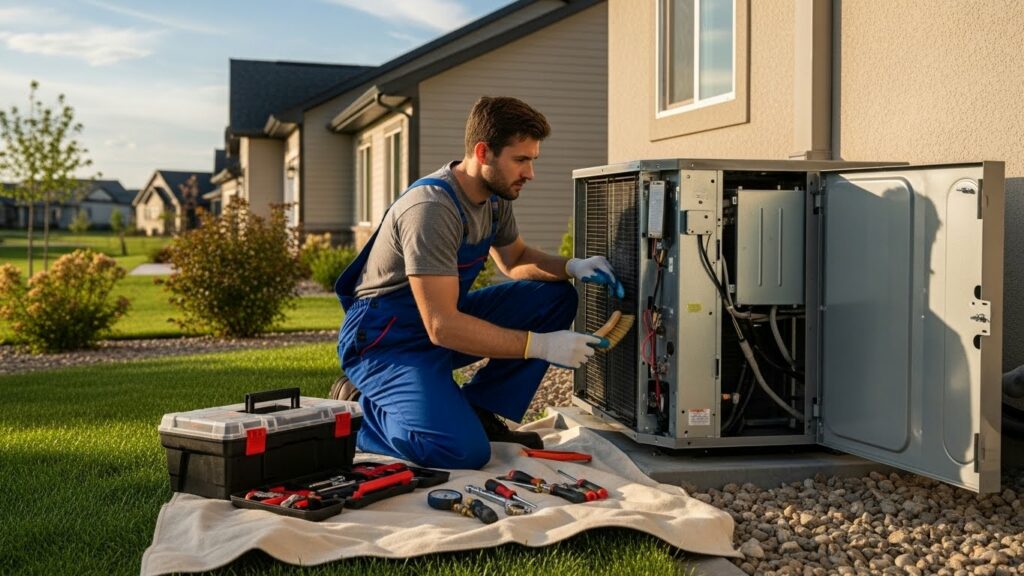
- Pre-season tune-up (April–May): Have a technician clean coils, verify refrigerant charge, test electrical components, measure airflow, and clear the drain line.
- High pollen window (May–June): Inspect filters more often to protect coils and keep airflow steady.
- Peak heat (July–August): Perform quick homeowner checks monthly. Listen for noise changes, watch humidity, and scan for icing.
- Late-season review (September): If performance lagged, schedule a targeted check to prevent small issues from lingering into next year.
Special Considerations for Older Equipment
Older systems often benefit from closer attention. Aging capacitors, contactors, and fan motors may behave normally when temperatures are moderate but falter during heat waves. If your system is over a decade old, consider adding a mid-season professional check or at least a thorough homeowner review of airflow, coil cleanliness, and drainage after the first extended hot spell.
Humidity and Comfort: A Hidden Driver of Frequency
In humid stretches, your AC must pull moisture from the air as well as lower temperature. If indoor humidity remains elevated after steady runtime, it can signal maintenance needs even if temperatures look fine. Double-check that the fan is set to “Auto,” verify the condensate line is draining, and review coil cleanliness. Continued issues merit a professional look.
Apartment and Townhome Realities in Skokie
Shared-wall living can complicate maintenance windows. Building rules may restrict technician hours or access to roof-mounted condensers. Plan professional visits early in the season before schedules fill, and do your part by replacing filters and keeping returns clear so airflow stays strong in compact mechanical closets.
DIY Mid-Season Checks You Shouldn’t Skip
- Filter inspection: Replace if visibly dirty or if airflow feels weaker at the vents.
- Outdoor coil rinse: Gently hose grass clippings and dust off the condenser fins.
- Thermostat verification: Ensure schedules or geofencing match your current routine.
- Condensate awareness: If you notice musty odors or water near the air handler, clear the line and monitor.
When Symptoms Change Your Timeline
Don’t wait for the next calendar reminder if your system shows warning signs. Uneven cooling, short cycling, ice on the refrigerant line, unusual noises, or persistently clammy air justify moving your professional visit earlier. The goal is to prevent minor inefficiencies from becoming breakdowns during the next heat wave.
Plan Around Demand Spikes
The busiest times for service tend to be the first warm spell of spring and the first scorching week of summer. Booking ahead secures convenient times and ensures your system is tuned before it’s under stress. If you missed the early window, prioritize homeowner checks and schedule the next available professional slot.
Why Annual Still Makes Sense—And When to Go Beyond
An annual professional tune-up remains the baseline for most Skokie homes. It’s comprehensive enough to catch trends and economical with your time. Step up to semiannual professional attention if you’ve had repeat issues, run the system heavily, manage allergy concerns with high-MERV filtration, or operate in a dusty environment due to nearby construction.
Documentation and Peace of Mind
Keep a simple log: filter change dates, coil rinses, drain clearing, and any professional findings. This record helps troubleshoot new symptoms and can satisfy warranty requirements. It also highlights patterns—like filters clogging faster in May—that inform next year’s plan.
Frequently Asked Questions
Q: Is spring really the best time for a tune-up?
A: Yes. Spring service prepares your system for peak demand and can resolve issues before parts and schedules tighten during summer heat waves.
Q: If my AC seems fine, do I still need service?
A: Preventive visits catch problems early and maintain efficiency. Clean coils, correct airflow, and verified electrical health can add up to a more comfortable home with fewer surprises.
Q: How do pets change the schedule?
A: Shedding and dander load filters faster. Inspect monthly and be ready to change sooner to protect airflow and your evaporator coil.
Q: What if I miss the spring window?
A: Schedule as soon as possible. A mid- or late-season tune-up is still valuable, especially if performance dips or humidity feels high.
Q: Should I run the fan continuously in summer?
A: Continuous fan can re-evaporate moisture from the coil and lift humidity. “Auto” usually delivers better dehumidification and comfort.
Q: How can smart thermostats help?
A: Many provide run-time reports and filter reminders, helping you adapt service frequency to real-world use rather than guessing.
Make Your Next Appointment with Confidence
When you’re ready to align your maintenance schedule with your household’s needs, book professional air conditioning maintenance and follow the seasonal rhythm outlined here. With the right cadence, your Skokie home will stay reliably cool, and your system will run smoother through every heat wave the summer throws your way.


